Rancho Bernardo’s inland location brings a distinctive comfort puzzle: long, sunny afternoons that drive up indoor heat, followed by cooler evenings that tempt short thermostat bumps. That daily swing, punctuated by the occasional Santa Ana event and wildfire smoke days, changes how systems should be sized, configured, and maintained. The right plan goes beyond picking a tonnage off a chart. It blends accurate load calculations, appropriate equipment selection, tight ducts, and balanced airflow with filtration that will not choke the system. This guide focuses on practical decisions that pay off in local homes, from attic ducts and zoning to MERV filters and thermostat settings, so you can match comfort to the Rancho Bernardo microclimate rather than fighting it.
- Microclimate Realities: What Local Weather Means for System Sizing
In areas with hot, bright afternoons and cooler nights, a system that is even slightly oversized will short-cycle during evenings and shoulder seasons. Short cycling leads to temperature swings, louder starts, and less time for filtration. A Manual J load calculation, which factors in window orientation, attic insulation, and infiltration, is the antidote to guesswork. That is also why working with a five-star HVAC Contractor in Rancho Bernardo can help validate the math and field-verify airflow so the installed capacity matches the real house, not just the square footage.
Consider a west-facing bonus room over the garage that overheats at 4 p.m. Solar gain, attic heat, and minimal return air converge there. A correctly sized main system with better return placement might be enough, but sometimes a ductless mini-split for that zone solves the late-day spike without upsizing the whole home. The decision hinges on room-by-room loads, duct paths, and how long the space is occupied at peak heat. Orientation, low-SHGC window film, and shading can trim that late spike before equipment even enters the conversation.
- Heat Pump or AC With Furnace: Matching Equipment to Your Energy Mix
With mild winters and many homes using rooftop solar, modern heat pumps deserve a hard look. Inverter-driven heat pumps modulate output to meet part-load conditions, avoiding the on-off cycling that plagues oversized single-stage ACs. Compare SEER2 for cooling efficiency and HSPF2 for heating efficiency; the higher the numbers, the lower the energy per unit of comfort. If you already rely on natural gas and prefer high-temperature supply air in cooler months, an AC paired with a high-AFUE furnace remains a solid option. Dual-fuel systems can blend both, using the heat pump on moderate days and switching to gas when outdoor temperatures dip.
The trade-off is up-front cost versus operating flexibility. Variable-speed systems cost more but excel at Rancho Bernardo’s long part-load periods, delivering quieter operation, steadier temperatures, and often better filtration time. If your electric rate plan favors daytime use or your PV output is strongest in the afternoon, a heat pump can align your comfort with your energy profile. If you keep gas service for cooking or backup heat, a high-efficiency furnace with a right-sized AC, preferably two-stage or variable-capacity, keeps summer loads in check while meeting winter preferences.
- Ducts, Static Pressure, and Zoning in Attic-Heavy Homes
Many local homes route ducts through vented attics that can run much hotter than indoor air. Leaky or under-insulated ducts add heat to supply air and pull dusty attic air into returns. Sealing, right-sizing, and insulating ductwork are not afterthoughts; they change delivered capacity and comfort at the register. Watch total external static pressure, which reflects how hard the blower must work to move air through the coil, filter, and ducts. High static starves rooms, raises blower watt draw, and can even cause coil freeze on hot days.
Zoning can help, especially when bedrooms are used at night, and living areas dominate in the afternoon. Yet motorized dampers increase static pressure when zones close. An ECM blower can adapt to a point, but it will not fix a starved trunk or undersized returns. Avoid old-school bypass dampers that waste cooled air; design zones with dedicated returns, larger trunks, and pressure-relief strategies like jump ducts or transfer grilles. If doors are typically closed, undercuts alone may not be enough to balance pressure. A quick test with room-to-room pressure measurements can reveal hidden imbalances that sabotage even the best equipment.
- Filtration and Wildfire Smoke: MERV Choices Without Strangling Airflow
MERV 11 to 13 filters capture finer particles, which matters during smoke days. The higher the MERV rating, the greater the pressure drop for the same surface area. A 4-inch media filter often provides more surface area and lower pressure drop than a 1-inch filter at similar MERV, helping maintain airflow and keep static in check. Variable-speed blowers can ramp to sustain target airflow, but they pay for it with higher electric draw if filters are too restrictive. Choose a filter your system can handle and measure static after installation to confirm it.
Two practical scenarios show why details matter. First, a clogged 1-inch MERV 13 can push total static beyond the blower’s limit, leading to weak registers and possible coil icing on hot afternoons. Swapping to a thicker media cabinet with the same MERV often restores airflow. Second, during heavy smoke, many homes benefit from running the system fan on low or circulation mode with a clean filter, supplemented by one or two portable HEPA units in occupied rooms. UV-C lights help with some biological growth inside air handlers, but they do not capture smoke particles. When outdoor air is poor, close any dedicated outside air inlets if present and focus on recirculation and filtration until conditions improve.
Controls and Setup That Pay Off on Day One
Smart thermostats add value only when configured for your equipment. If you have a heat pump, set auxiliary heat lockout so electric resistance strips or a gas furnace do not engage too early on cool mornings. For two-stage or variable systems, enable staging and compressor ramp profiles that prioritize longer, lower-speed runs during typical afternoons. A moderate afternoon setpoint paired with pre-cooling before the hottest hour can flatten peaks, especially in sun-exposed rooms.
Thermostat placement matters as much as the device. A thermostat near a return or in a sun-splashed hallway will misread the house. Balance that with supply air temperature checks to ensure the coil and blower are doing their jobs. Title 24 requires continuous or balanced ventilation strategies in new builds, but in existing homes, running bath fans on low timers can help with odors and moisture without overloading the HVAC. Just avoid using the HVAC fan on constant ON during peak heat if ducts run through a hot attic; that can pick up attic heat when the compressor is off. A circulation or auto mode with periodic fan runs is a better compromise.
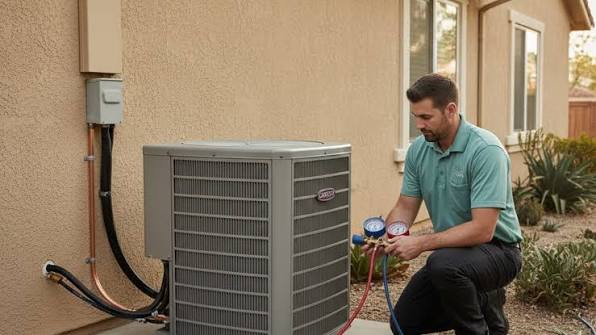
Before the first heat wave, change or upgrade filters, clear vegetation 2 to 3 feet around the outdoor condenser, and flush the condensate drain to prevent overflows. During a mid-season tune, a technician can inspect blower wheels, verify refrigerant charge using superheat or subcooling, and check that total external static pressure is within the blower’s capability. Those steps protect efficiency and comfort and reduce nuisance breakdowns right when you need cooling most. If any upgrades are planned, sequence them: fix duct leakage and return sizing first, then invest in equipment so the new system can perform to spec.
Rancho Bernardo’s pattern of sharp afternoon heat and pleasant evenings rewards HVAC decisions that respect part-load operation, airflow, and filtration. Sizing to the house rather than the listing, tightening ducts before choosing equipment, selecting filters your blower can handle, and configuring controls for longer, quieter runs all move comfort and efficiency in the right direction. Pair those choices with a maintenance rhythm that anticipates smoke events and summer peaks, and your system will feel less like a thermostat tug-of-war and more like a steady background presence that simply works.