Every first-generation Mustang for sale comes with a story, and most of those stories have been edited. Sixty years of repaints, panel swaps, engine changes, and “restored two years ago” claims sit between the car in front of you and the car that left Dearborn, San Jose, or Metuchen. The buyers who end up happy are not the ones who negotiate hardest. They are the ones who learn to read what a car’s sheet metal, paperwork, and repair scars are actually telling them.
This is a guide to that kind of reading — the physical evidence, the documentation, and the hard financial math of putting a 1960s muscle car back on the road without discovering, three invoices later, that you bought a project instead of a car.
Start With the Numbers, Not the Paint
On a 1965–1973 Mustang, the VIN tells you the model year, assembly plant, body style, and the engine code the car was built with. A door data plate or warranty tag adds body colour, trim, axle ratio, and transmission. Cross-reference those against what you are looking at. A car wearing a 302 badge with a six-cylinder code in the VIN is not a fraud by definition — engine swaps were a normal part of life in 1978 — but it changes what the car is worth and who will want it next.
Then look for the harder-to-fake marks: partial VIN stampings on the inner fender or frame rail, date codes on glass, casting dates on the block and heads, and build-sheet fragments sometimes tucked under seat springs or above the fuel tank. On a genuine Shelby, Boss, or Mach 1, these details separate a six-figure car from a very convincing tribute. Sellers who know their car will volunteer this information. Sellers who dodge it are telling you something.
What Rust Actually Costs
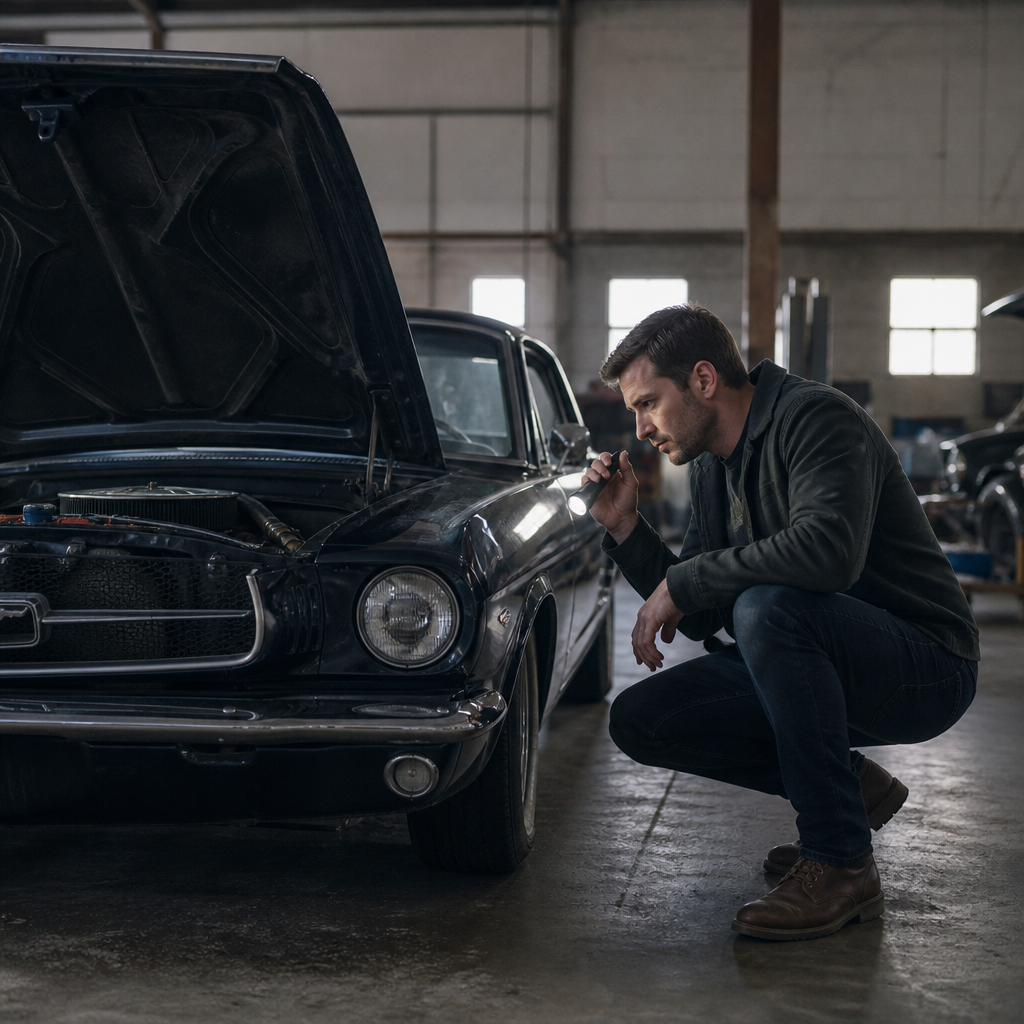
Bring a magnet and a flashlight. The places that matter on a classic Mustang are consistent: torque boxes, floor pans around the seat mounts, the cowl under the windshield, rear frame rails above the leaf spring mounts, shock towers, and the lower rear quarters behind the wheel openings. Surface rust on a trunk floor is a weekend. Rot in the cowl means pulling the dash and windshield. Collapsed torque boxes mean the body has been flexing for decades and the door gaps you are admiring may be cosmetic rather than structural.
A paint meter is useful but not conclusive. Thick readings over a quarter panel might mean filler, or they might mean three layers of enamel from 1984. Pair the meter with your eyes: look along the body line at a shallow angle in daylight and find the waves. Ripples in the sail panel and uneven reflections across the roof often mean the car was hit and straightened before anyone cared about doing it properly.
Collision History on a Car Older Than Most Records
Modern vehicle history reports are nearly useless for a 1966 fastback. Pre-1981 VINs often will not even return a usable record. That leaves physical forensics: overspray in the door jambs, mismatched spot welds, replacement cowl tags, factory sealant missing from seams, and bolt heads on fenders and hood hinges that have obviously been turned.
Learning to interpret bent metal has value far beyond the classifieds. The same skill set — matching the direction and depth of a crease to the force that caused it — is what insurers and adjusters rely on when stories and evidence do not line up, something explored in detail in a piece on what happens when vehicle damage patterns contradict the other driver’s account. On a 1960s car, the “other driver” may be four owners back and long gone, but the metal still remembers the impact.
The Restoration Math Nobody Wants to Do
Here is the uncomfortable arithmetic: buying the cheapest example of a desirable car is almost always the most expensive route to owning one. Media blasting, metal fabrication, bodywork, and paint on a rough shell routinely dwarf the purchase price. Add a drivetrain rebuild, new interior, brake and suspension work, wiring, glass, and chrome, and a car bought for the price of a used sedan can absorb several times that figure before it is roadworthy.
High-profile builds illustrate the ceiling. Coverage of what a full Shelby Mustang restoration can cost shows how quickly correct-part, concours-level work escalates once rarity and originality enter the equation. Most buyers are not chasing that standard, but the lesson scales down: labour hours, not parts prices, drive the bill, and labour hours are determined by how bad the car was when it arrived.
Three Honest Paths
- Buy finished. Pay for someone else’s completed project and inherit their decisions. Cheapest overall, least control.
- Buy solid, improve gradually. A rust-free, running driver you upgrade over several seasons. Best balance for most owners.
- Buy a shell and commission a build. Total control, longest timeline, highest cost, and the only route to a car built exactly to your spec.
When You Want the Look Without the 1965 Driving Experience
There is a category of buyer who loves the shape of a first-generation Mustang but has no appetite for drum brakes, four-way flashers as an afterthought, carburettor cold starts, or a cabin that cooks in July traffic. Original cars reward patience and tolerate flaws as part of the charm; they do not, however, behave like modern vehicles in a merge lane. For that buyer, the restomod route — vintage body, contemporary engineering underneath — answers the question honestly rather than pretending the 1960s built better brakes than they did.
That is the niche filled by specialist builders who reimagine the first-generation Mustang as a new car rather than a refurbished old one. Operations such as Revology Cars construct their vehicles around modern drivetrains, independent suspension, air conditioning, braking systems, and electrical architecture, while keeping the proportions and detailing that made the original worth copying. It is a different proposition from a numbers-matching restoration, and it attracts a different buyer — someone who wants to drive the car across three states in August rather than trailer it to a judged show. Neither approach is more legitimate; they simply answer different questions, and knowing which question you are asking saves a great deal of money and disappointment.
A Practical Inspection Routine
- Photograph the VIN, door tag, and any visible partial stampings before discussing price.
- Put the car on a lift or at least get under it with good light. No lift, no deal.
- Check panel gaps, then open and close every door, hood, and trunk lid twice.
- Cold-start it yourself. Watch the exhaust for the first thirty seconds.
- Drive it above 45 mph if legally possible, and brake firmly once from speed.
- Ask for receipts. A folder of invoices is worth more than a fresh coat of paint.
- Pay an independent marque specialist for a pre-purchase inspection. It is the best money in the entire transaction.
Buy the Evidence, Not the Enthusiasm
The appeal of a 1960s American performance car has never been about objective performance figures. It is about proportion, sound, and the fact that these cars were designed when style arrived before aerodynamics. That emotional pull is exactly why disciplined inspection matters: enthusiasm is what gets people to overpay for filler and a shiny engine bay. Treat the car as a document, read every page of it, and decide what you want before you fall for a colour. Do that, and the Mustang in your garage will be the one you meant to buy.