Powder-coated metal is not one uniform surface. Texture, coating chemistry, cure, cleaning residue, and dust can change how an adhesive bonds. If a label lifts from a cabinet, tool case, or metal enclosure, do not order the strongest adhesive immediately. Identify whether the label is being applied to a rough texture, a contaminated panel, or a surface that later sees heat and handling. Test the proposed construction on the exact coated part after the same production and cleaning steps used in normal work.
Start with the finish, not the base metal
The label contacts the coating, not bare steel or aluminum. Two powder-coated panels may look similar but have different gloss, texture, and surface energy. Ask the fabricator which coating and cure process are used, and whether more than one finishing supplier is approved. Keep examples from each finished source for testing. A peel result on a smooth office file cabinet will not establish performance on a matte textured machine housing.
Check where the panel will be used. A permanent serial label on an indoor enclosure has a different lifetime from a temporary production status label. A removable label for a rental case has different residue requirements. State the intended dwell, environmental exposure, and removal expectation before discussing adhesive strength. A label that stays forever is not a success if staff need clean removal next week.
Clean and apply consistently
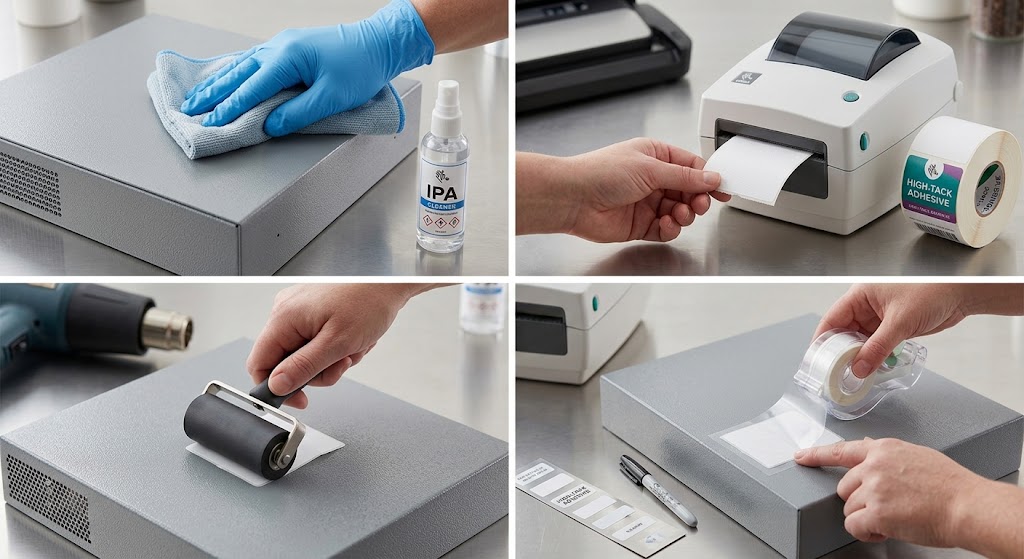
Loose powder, shop dust, oils, silicone polish, and fingerprints can keep adhesive from making contact. Define an approved cleaning method that does not damage the coating, and allow the surface to dry. Apply the label at the normal panel temperature and press it firmly across the whole face. Do not put a rigid paper label over a sharp texture or a corner where it cannot contact the valleys. A larger flat panel or attached tag may work better than escalating adhesive strength.
The person applying the label should know exactly where it goes. Mark an approved zone that avoids welds, screws, hinges, handles, and surfaces routinely cleaned with solvent. For a product that is later heat treated or washed, decide whether labeling should happen after that process. A label applied perfectly before a harsh finish step may be damaged by a sequence it was never designed to survive.
Compare candidate constructions properly
Request sample thermal labels for metal with different approved adhesives or face materials. Apply them to real panels from the worst finish and texture. Inspect immediately, after the supplier-recommended dwell, after the expected storage time, and after normal handling. Record corner lift, full-face bond, residue on removal, and scan quality. If the label contains a barcode, scan it before and after the durability portion of the trial.
Do not use an arbitrary thumb-pull as the only criterion. A label can feel hard to peel but still fail at a corner when a case slides against a rack. Define a practical pass rule: no edge lift that catches during handling, readable data throughout the required life, and acceptable removal if removal is part of the job. Test at the actual minimum application temperature if panels are labeled in a cold workshop.
Distinguish print and adhesive failures
If the label remains flat but the barcode fades, the coating bond is not the problem. Check thermal face material, image life, printer settings, and exposure to heat or chemicals. If only the edge nearest a handle lifts, move the label. If all labels lift from one coating batch, investigate a finishing or cleaning change. Save a failed panel and a passing panel rather than discarding the evidence.
If a scanner struggles on a highly curved metal housing, test the printed code on a flat tag or a more suitable panel. Barcode readers need clear margins and a geometry they can see. Making the adhesive stronger does not straighten a distorted symbol.
Check cleaning and service routines
An enclosure may be wiped with detergent, alcohol, or a process-specific cleaner after installation. Ask the maintenance owner exactly what is used and how often. Test the printed face and bond under that approved routine. Do not assume a generic “chemical resistant” description covers every solvent. If cleaning must be aggressive, a protective plate or more durable print method may be required.
Rework also matters. If a panel is repainted or replaced, the label’s identity should be moved under a controlled process. A serial label transferred to a different physical unit can break service history. Print from the verified asset record, apply after finishing, and remove any old active code.
Give the supplier a useful specification
Provide a coated sample panel, texture and coating information if known, printer model, roll size, barcode layout, application temperature, service environment, required life, and removal expectation. Ask for a converted-roll sample of the exact proposed stock. A supplier of direct thermal labels can recommend candidate materials, but the buyer should approve them on the real finished part. Retest if the coating, cleaner, application location, or printing system changes.
For powder-coated metal, the most reliable answer often comes from a small surface-specific trial. Clean the panel, choose a flat protected location, compare a few constructions, and document the winner. That is more repeatable than ordering “extra permanent” labels without defining the surface and the job.
Build a small surface test matrix
Use samples from the actual coating line, including different colors, textures, and cure batches. Apply candidate labels to cleaned and as-received panels, then test after the normal dwell, cleaning, and temperature cycle. Note whether a failure leaves adhesive on the metal, peels cleanly, or removes coating. Those patterns suggest different causes. If labels fail only on one color or batch, investigate coating chemistry and surface contamination before changing the entire label specification. If the metal part is outdoors, add the expected sunlight and water exposure to the trial; a strong initial peel does not prove long-term suitability. Photograph each sample and keep its coating batch linked to the result.
Ask maintenance whether a lubricant, solvent, or release agent touches the finished part before labeling. If it does, include that normal contamination in the trial instead of testing only freshly cleaned panels. An adhesive choice based on an unrealistically perfect sample will not hold up on the shop floor. Separate clean and as-received results in the record so purchasing knows whether to change the label or the surface-preparation step.