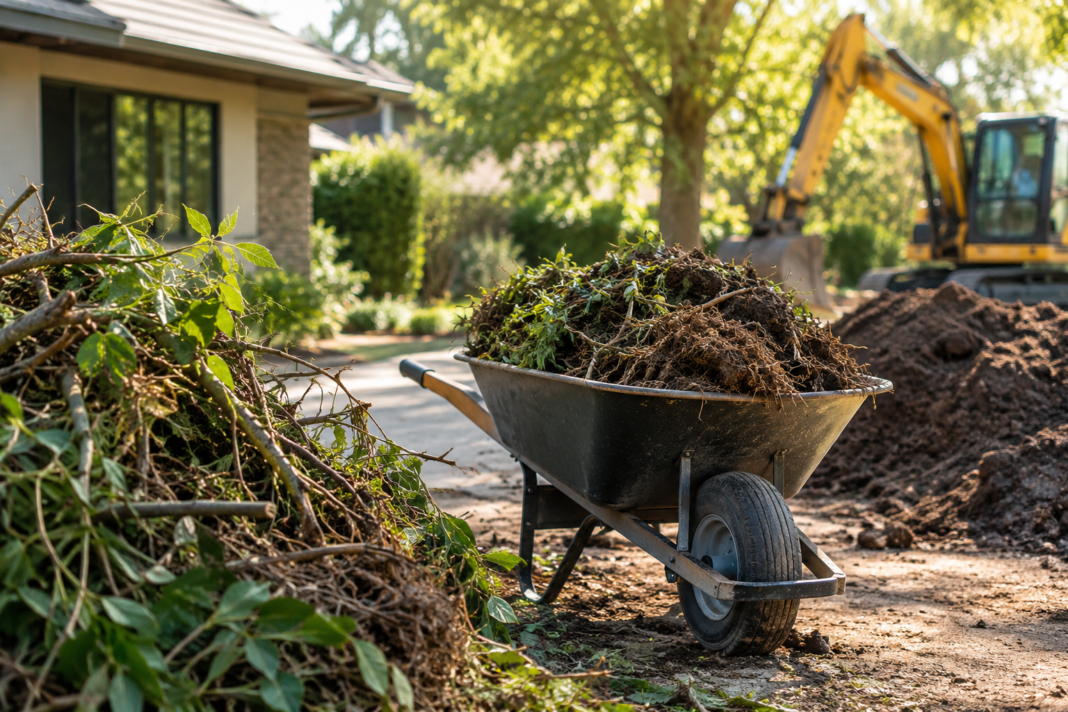
Property upgrades often involve more than construction debris. Contractors may also need to remove overgrown shrubs, tree limbs, sod, roots, soil, mulch, weeds, vines, and other green waste before new hardscaping, additions, drainage work, fencing, landscaping, or exterior improvements can begin.
These materials create a different cleanup challenge than drywall, lumber, or packaging. Brush can be bulky, soil becomes heavy quickly, and mixed loads may be harder to manage than expected. Contractors who plan for landscaping-related waste early can keep access routes open, protect staging areas, and avoid unnecessary handling as the project moves from site preparation into construction.
Start With the Full Exterior Scope
Before clearing begins, contractors should identify everything that needs to be removed from the property.
A project may include brush along a fence line, shrubs around the foundation, sod in a future patio area, small trees near an addition, or soil from drainage and grading work. Decorative rock, edging, old landscape fabric, irrigation components, pavers, or fencing may also be mixed into the same areas.
Understanding the full scope makes it easier to separate materials and plan disposal before crews begin creating piles.
Separate Green Waste from Other Debris
Brush, branches, leaves, vines, and plant material behave differently from concrete, lumber, metal, or household debris.
Contractors should decide how each material category will be handled before clearing starts. Mixing everything into one pile may make loading slower and can complicate disposal later.
A simple separation system can keep organic waste in one area, dense materials in another, and reusable landscaping materials somewhere else.
Plan Dumpster Placement Around Site Work
Dumpster placement should support both the clearing phase and the construction that follows.
Working with Temporary Dumpster can help contractors coordinate container placement and timing around renovation projects that generate substantial outdoor debris. The location should be close enough for efficient loading while staying out of future excavation zones, delivery areas, equipment routes, and finished surfaces.
A spot that works during brush removal may become a problem once framing, concrete, or material deliveries begin.
Cut Brush Into Manageable Sections
Long branches and tangled brush can consume container space quickly when loaded carelessly.
Crews should cut larger branches and vines into manageable lengths when practical. Smaller sections are easier to move through gates and around structures and can usually be loaded more efficiently.
This is especially useful on tight residential sites where debris must travel through side yards or narrow access points before reaching the dumpster.
Avoid Creating Multiple Brush Piles
One common mistake is allowing every crew member to create a separate pile near the area being cleared.
Those piles eventually have to be moved again, adding labor and reducing working space. Contractors should establish one or two designated staging areas if direct loading is not practical.
The closer debris can move toward its final disposal point on the first handling, the more efficient the cleanup becomes.
Treat Soil as a Separate Planning Issue
Soil is far denser than most green waste. A relatively small amount can create substantial weight.
Contractors should avoid treating excavated soil like ordinary brush. If grading, trenching, foundation work, or landscape changes will produce significant amounts, the soil should be evaluated separately.
Some material may be usable for backfill or grading elsewhere on the property, reducing the amount that needs to leave the site.
Reuse Suitable Soil When Possible
Before hauling soil away, contractors should determine whether clean material can be reused later in the project.
It may be useful for final grading, filling low areas, landscape beds, or restoring disturbed sections after construction. Removing usable material only to purchase replacement soil later creates unnecessary hauling and expense.
A designated stockpile area can preserve useful soil while keeping it separate from waste.
Manage Root Balls Carefully
Shrubs and small trees often produce large root balls containing soil, stones, and organic material.
These can be surprisingly heavy and difficult to handle. Excess loose soil should be removed when practical before root material is transported.
Contractors should also avoid allowing root balls to accumulate in equipment paths or near future work zones. Their size can make them difficult to move once the site becomes crowded.
Coordinate Clearing with Excavation
Brush and vegetation removal often happens immediately before excavation, grading, or foundation work.
The site should be cleared enough for equipment to operate efficiently, but contractors should avoid opening more of the property than necessary if it creates unnecessary erosion or mud.
Waste removal should follow the construction sequence so crews are not repeatedly moving brush or soil simply to make room for the next machine.
Keep Access Routes Open
Outdoor renovation work often relies on the same driveway, gate, or side yard for debris removal, equipment, and new material deliveries.
Contractors should protect these routes from brush piles, excavated soil, pallets, and parked equipment.
If debris blocks access, crews may lose time moving it before trucks or machinery can enter. A clear route keeps both cleanup and construction moving.
Protect Existing Landscaping
Not every plant or landscape feature is being removed.
Mature trees, shrubs, lawns, irrigation components, retaining walls, patios, and garden areas may need to remain untouched. Contractors should plan debris routes around these areas rather than dragging branches or equipment through them.
Keeping waste away from preserved landscaping reduces the chance of creating additional restoration work later.
Plan Around Weather
Weather can dramatically change how outdoor debris behaves.
Rain makes soil, sod, roots, and vegetation heavier. It can also turn hauling routes muddy and make equipment movement more difficult. Wind can scatter leaves, lightweight branches, and plastic landscape materials.
When poor weather is expected, contractors may benefit from removing loose debris before conditions deteriorate and protecting clean soil that may be reused.
Keep Drainage Areas Clear
Brush, leaves, soil, and mulch should not be allowed to collect in storm drains, swales, catch basins, or other drainage paths.
During clearing, small materials can easily migrate downhill or wash into drainage systems during rain.
Contractors should keep these areas open throughout the project and remove loose debris before it has a chance to create drainage problems.
Coordinate With Hardscape Removal
Many property upgrades combine landscaping work with removal of concrete, pavers, retaining walls, or decorative stone.
These materials should usually be treated differently from ordinary green waste because of their density and handling requirements.
Contractors should identify hardscape debris before work begins and avoid allowing it to become mixed throughout brush and soil piles.
Monitor Both Weight and Volume
Green waste and soil create two different capacity concerns.
Brush may fill available space quickly because it is bulky. Soil may use much less space but add significant weight. Contractors need to watch both factors instead of assuming all outdoor debris behaves the same way.
A mixed project can reach practical limits sooner than expected if soil and dense materials are loaded after large amounts of brush.
Build Cleanup Into Daily Operations
Outdoor waste should not be left until the end of the project.
Crews should remove or consolidate debris as clearing, grading, and construction progress. Short daily cleanup periods can keep equipment routes open and prevent the site from becoming covered in scattered vegetation and soil piles.
Regular cleanup also makes it easier for supervisors to see actual site conditions.
Clear Staging Areas Before Deliveries
Property upgrades often transition quickly from removal into installation.
Lumber, stone, pavers, concrete materials, fencing, plants, or other products may arrive shortly after site clearing. Contractors should make sure old debris is not occupying the best delivery and staging areas.
A clean transition between removal and installation reduces the amount of material that must be moved twice.
Plan Service Before Capacity Is Gone
If a dumpster is being used, contractors should monitor it throughout the clearing phase.
Waiting until the container is completely full can force crews to create temporary brush or debris piles elsewhere on the property. Those materials then have to be moved again after service.
Scheduling pickup or replacement before capacity is exhausted keeps cleanup moving steadily.
Protect the Service Route
The dumpster still needs to remain accessible after the site becomes active.
Equipment trailers, soil piles, pallets, landscaping materials, and contractor vehicles can gradually block the route required for pickup.
Crews should know which access area must remain open and verify that it is clear before scheduled service.
Finish With a Property-Wide Cleanup
Once the major upgrade is complete, contractors should inspect the entire exterior work area.
Check fence lines, side yards, planting beds, driveways, drainage areas, and equipment routes for branches, wire, landscape fabric, plastic, roots, soil piles, and other leftover materials.
Final cleanup should restore the property beyond the immediate construction zone and remove evidence of temporary staging areas.
Managing brush, soil, and green waste during property upgrades requires contractors to think about volume, weight, reuse, access, and the sequence of work. Organic debris can consume space quickly, while soil and root material can become unexpectedly heavy.
By separating waste streams, reusing suitable soil, cutting brush into manageable sections, protecting access routes, coordinating cleanup with excavation and deliveries, and monitoring disposal capacity, contractors can keep outdoor renovation projects more organized. A well-planned waste strategy helps the site transition cleanly from clearing and preparation into the upgrades that follow.