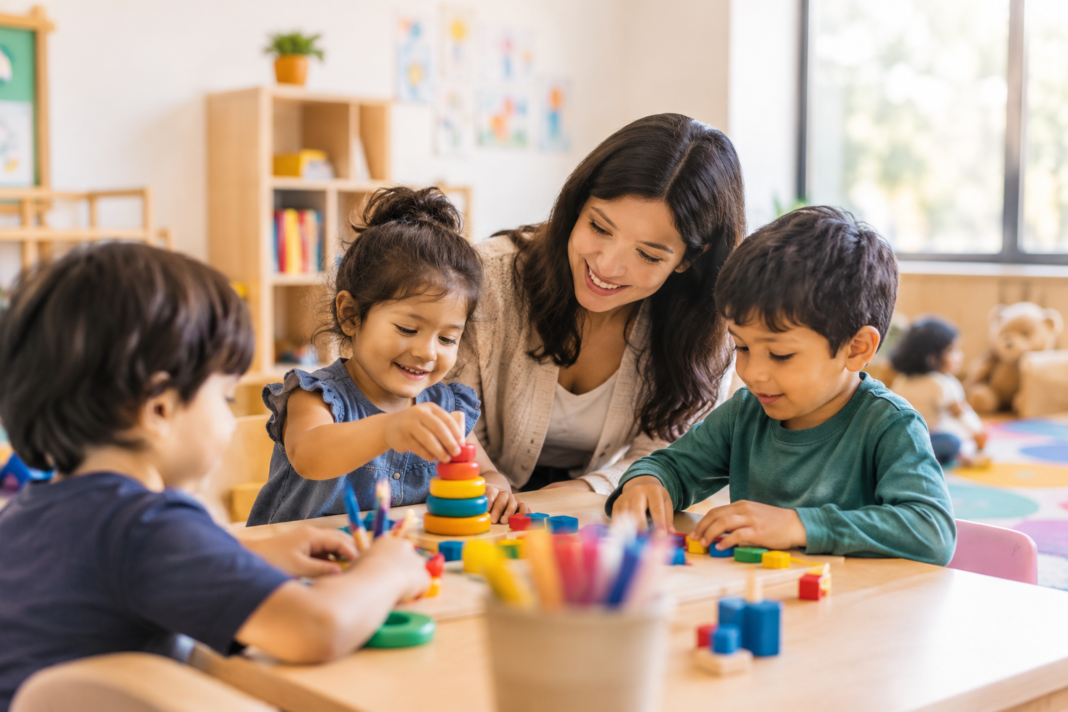
Early childhood is a time of rapid growth, curiosity, and discovery. A thoughtfully designed nursery school helps children develop essential learning habits through meaningful activities, social interaction, and playful exploration. For families in Kharadi, understanding the developmental benefits of nursery education can make the process of choosing an appropriate learning environment easier.
Why Early Learning Habits Matter
Children develop attitudes toward learning through their earliest experiences.
When activities are enjoyable and appropriately challenging, children become more willing to explore unfamiliar concepts.
Positive experiences also encourage persistence and confidence.
Encouraging Curiosity
Young children naturally investigate objects and ask questions.
Educators can support this curiosity by introducing activities that encourage observation.
Exploration helps children develop independent thinking.
Developing Concentration Through Play
Concentration develops gradually during early childhood.
Activities such as puzzles, sorting, building, and drawing provide opportunities to practise attention.
Understanding the Value of Repetition
Children often enjoy repeating familiar activities.
Repetition allows them to improve coordination and develop confidence.
Educators should recognise when repeated practice supports learning.
Building Communication Skills
Language development is an essential part of nursery education.
Stories, songs, conversations, and imaginative activities introduce children to new words.
Encouraging Confident Speaking
Children should feel comfortable sharing thoughts and asking questions.
Educators can support communication by listening attentively and responding positively.
Group discussions also introduce turn-taking.
Supporting Physical Development
Movement contributes to children’s overall growth.
Running, balancing, dancing, and supervised outdoor play encourage coordination.
Developing Fine Motor Skills
Drawing, arranging objects, turning pages, and manipulating suitable materials strengthen hand movements.
These abilities support future writing and practical independence.
A balanced nursery school provides opportunities for both large and small movements.
Encouraging Emotional Awareness
Young children experience emotions that they may struggle to explain.
Educators can help them recognise feelings and communicate needs appropriately.
Learning to Manage Frustration
Challenges are a natural part of development.
Children may become frustrated when activities do not go as expected.
Patient guidance helps them develop persistence and emotional regulation.
Creating Positive Social Experiences
Nursery classrooms introduce children to different personalities.
Shared activities encourage cooperation and friendship.
Understanding Group Behaviour
Children gradually learn to listen, wait, share materials, and respect others.
Educators should model positive behaviour rather than rely on unnecessary pressure.
These experiences help develop empathy.
The Importance of Daily Routines
Predictable schedules create emotional security.
Children benefit from familiar periods for activities, meals, movement, and rest.
However, routines should remain flexible enough to accommodate individual needs.
Encouraging Responsibility
Children can participate in simple classroom responsibilities.
Organising belongings and returning materials help develop independence.
Such activities also strengthen confidence.
Choosing a Nursery Environment in Kharadi
Parents should consider educator interactions, classroom organisation, learning opportunities, and safety practices.
Families can explore the nursery school map location before arranging a visit.
Observing daily activities provides useful insight into the learning environment.
Conclusion
A nurturing nursery school helps children develop concentration, communication, independence, and emotional confidence through everyday experiences. Meaningful play and supportive educator relationships encourage positive learning habits. By choosing an environment that values individual development, families can help children begin their educational journey with curiosity, resilience, and enthusiasm.