
Introduction to Modern Face Analysis
AI face analysis uses computer vision to examine visible facial characteristics, including face shape, symmetry, eye spacing, jawline definition, and facial proportions.
These measurements can help you explore hairstyles, eyewear, makeup, and grooming choices that complement your natural features.
Rather than judging individual characteristics, facial analysis provides a structured way to understand how different features relate to one another.
However, results depend on photograph quality, lighting, and camera positioning. AI measurements cannot objectively determine beauty, personality, or personal worth.
What Does AI Face Analysis Actually Measure?
AI face analysis examines relationships between facial features rather than evaluating each characteristic independently.
Common measurements include:
- Facial thirds: Relative heights of the upper, middle, and lower face.
- Face width-to-height ratio: The relationship between facial width and length.
- Facial symmetry: Similarities between the left and right sides.
- Eye spacing: Distance between the eyes relative to facial width.
- Jawline structure: Visible jaw width, contours, and chin shape.
- Canthal tilt: The angle between the inner and outer eye corners.
- Facial proportions: Relationships among the forehead, cheekbones, nose, lips, and chin.
These measurements describe facial structure without establishing an ideal appearance.
For a more complete overview, Facefy’s Face analysis tool helps users explore facial characteristics and proportions together.
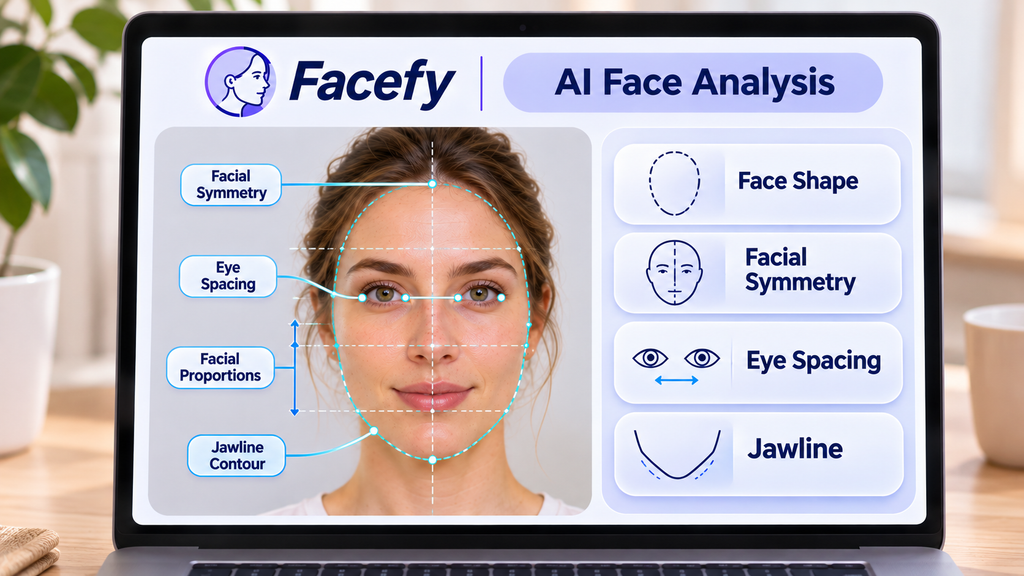
This makes it a useful starting point when choosing hairstyles, makeup techniques, or grooming styles based on visible facial features.
Face Shape: The Foundation of Facial Analysis
Face shape is commonly assessed by comparing forehead width, cheekbone width, jawline contours, and overall face length.
Common Face Shape Categories
- Oval: Longer than wide, with gently curved contours.
- Round: Similar facial width and length, with softer outlines.
- Square: Angular jawline with comparable forehead and jaw widths.
- Heart: Broader upper face narrowing toward the chin.
- Oblong: Noticeably longer than wide.
- Diamond: Prominent cheekbones with a narrower forehead and jawline.
- Triangle: Wider jawline relative to the forehead.
Face shapes exist along a spectrum, so some people have characteristics associated with multiple categories.
Understanding your approximate shape can narrow down hairstyle and eyewear options, although hair texture, density, and personal preferences remain equally important.
Core Facial Features Examined During Analysis
Eyes and Eyebrows
Eye analysis examines visible eye shape, spacing, eyelid contours, and eyebrow positioning.
Common descriptions include almond, round, hooded, monolid, upturned, and downturned eyes.
These characteristics may overlap and influence how different makeup techniques appear.
Nose and Lips
Facial proportion analysis may examine nose width, nose length, mouth width, and distances between facial landmarks.
These measurements are relative to surrounding features rather than independent indicators of attractiveness.
Jawline and Chin
Jawline analysis considers visible contours, jaw width, and chin shape.
Photographs can suggest whether the jawline appears rounded or angular, but they cannot reliably reveal complete underlying bone structure.
How AI Face Analysis Works Behind the Scenes
AI facial analysis generally combines computer vision and machine learning to identify facial features and estimate geometric relationships.
Step 1: Facial Detection
The system identifies a face within an uploaded photograph.
Often, one photo is enough for analysis when it is a clear, front-facing photo with a good photo setup and a straight camera angle.
Step 2: Facial Landmark Identification
Computer vision models estimate reference points around the eyes, nose, mouth, and facial outline.
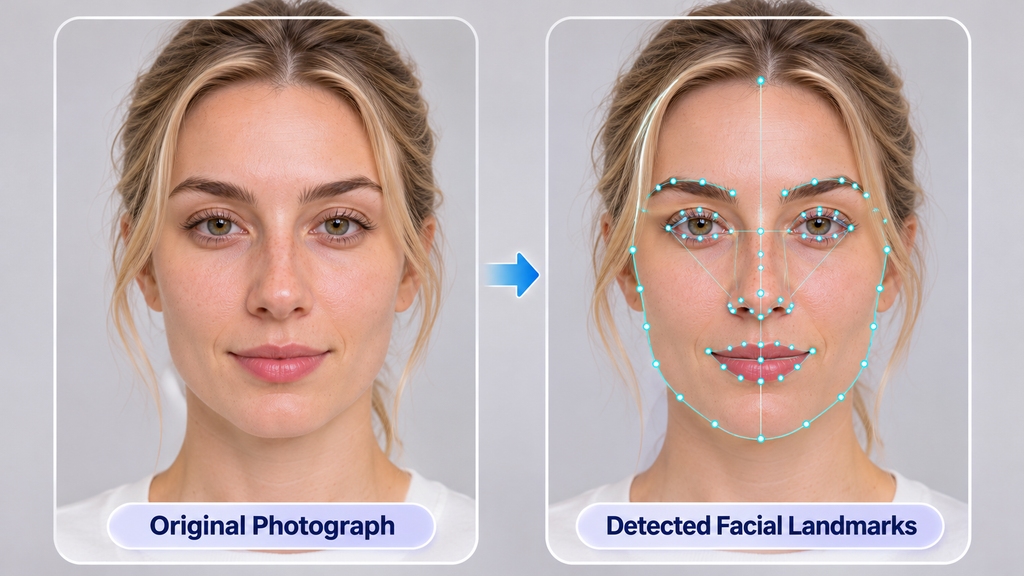
These landmarks help identify visible relationships between features.
Step 3: Measurement and Comparison
The system calculates distances, angles, and ratios between detected landmarks.
Depending on the model, these measurements support estimates of face shape, symmetry, and facial proportions.
Step 4: Results and Interpretation
Results may include facial measurements, classifications, visualizations, or appearance-based scores based on facial geometry, such as overall attractiveness ratings on a 1–10 scale or facial harmony scores on a 0–100 scale, where faces land in grouped ranges and a full report may label high harmony from 80 to 87. Average attractiveness ratings often cluster around 5.4 out of 10, and faces with higher symmetry usually score better, though these are still system-generated estimates.
These findings describe photograph-based estimates rather than medical conclusions.
What Does an AI Attractiveness Score Mean?
Some facial analysis tools generate attractiveness scores based on selected features, including symmetry and proportions.
However, these scores reflect the criteria of individual systems rather than universal beauty standards.
A score of 7 out of 10, for example, does not establish that someone is objectively more attractive than another person.
Beauty preferences vary across individuals, cultures, and social contexts.
Facial Symmetry, Golden Ratio, and Facial Harmony
Facial Symmetry
Facial symmetry describes similarities between the left and right sides of the face.
Natural asymmetry is extremely common. Differences in eyebrow height, eye shape, or jawline contours are normal.
Camera angles and uneven lighting can also exaggerate apparent asymmetry.
The Golden Ratio
The golden ratio is a mathematical relationship of approximately 1.618.
Although frequently discussed in facial aesthetics, it is not a scientifically established universal formula for beauty.
Facial Harmony
Facial harmony describes how individual features appear in relation to one another.
Different combinations of facial characteristics can create balanced appearances without following identical proportions.
Eye Shape, Canthal Tilt, and the Eye Area
Canthal tilt describes the angle between the inner and outer corners of the eyes.
- Positive: The outer corner sits higher.
- Neutral: Both corners sit at approximately the same level.
- Negative: The outer corner sits lower.
These classifications describe natural anatomical variations rather than attractiveness rankings.
Facefy’s Canthal Tilt Test provides another way to explore eye-corner positioning from a photograph.
What Your Face Analysis Report Can and Cannot Tell You
AI facial analysis can provide observations about face shape, symmetry, eye spacing, jawline contours, and facial proportions.
However, a photograph cannot reliably establish complete three-dimensional bone structure, diagnose medical conditions, or determine personality.
Facial expression analysis also cannot reliably reveal someone’s actual emotional state or intentions.
Results are most useful when interpreted alongside personal preferences and an understanding of these limitations.
Turning Facial Analysis Into Practical Styling Decisions
Facial measurements become more useful when connected to everyday styling choices.
Choosing a Hairstyle
Someone with a longer face may experiment with side volume or fringes, while someone with a rounder face might explore layered hairstyles.
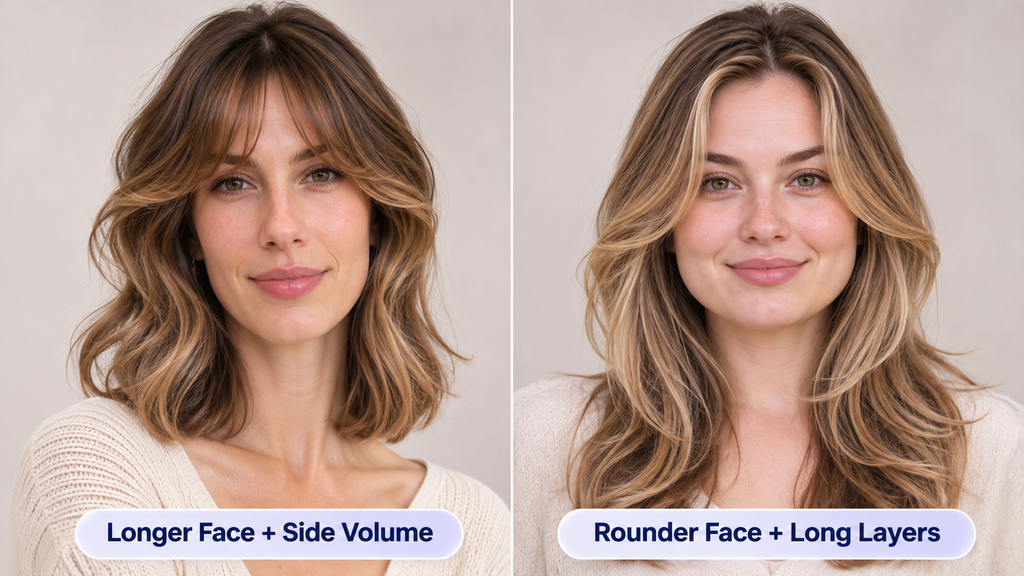
For a broader understanding of how these characteristics work together, Facefy offers AI-powered facial analysis tools that help users explore their natural features before making styling decisions.
By examining face shape, symmetry, and facial proportions, users can make more informed choices about hairstyles and personal presentation.
However, hair texture, density, maintenance requirements, and personal preferences should guide the final decision.
Exploring Eyewear
Frame shape and size influence how facial proportions appear.
Rounded frames can soften angular outlines, while geometric frames may provide contrast with softer facial contours.
Comfort, fit, and personal style remain essential.
Adjusting Grooming and Photography
Beard shaping, eyebrow grooming, makeup placement, lighting, and presentation factors like skin texture can influence facial appearance.
These choices affect visual emphasis without necessarily changing facial anatomy. For example, improving skin texture, skin quality, skin clarity, or concerns like dark circles can change how features read in photos even when the underlying structure stays the same.
Ethics, Privacy, and Responsible AI Face Analysis
Facial analysis raises important questions about privacy, consent, and algorithmic bias.
Before uploading photographs, review the service’s privacy policy to understand how images are processed and stored.
AI results may also vary across populations because of differences in training data.
Responsible use means recognizing that facial measurements cannot define identity, health, attractiveness, or personal worth.
How to Take a Better Photo for AI Face Analysis
Photograph quality can significantly influence measurement consistency.
For clearer results:
- Face the camera directly: Keep your head upright.
- Use even lighting: Avoid strong shadows.
- Maintain a relaxed expression: Avoid exaggerated facial movements.
- Position the camera at eye level: Reduce perspective distortion.
- Avoid close-up distortion: Maintain a comfortable camera distance.
- Keep facial features visible: Move hair away when necessary.
- Avoid filters: Digital reshaping can alter apparent proportions.
If comparing photographs over time, use consistent lighting, distance, framing, and expressions.
Even under similar conditions, small measurement differences remain possible.
Why Explore AI Face Analysis With Facefy?
Facefy brings together appearance-related tools that help users understand facial characteristics and explore styling possibilities.
Rather than relying exclusively on subjective impressions, users can examine visible features and consider how they relate to hairstyles, grooming, and personal presentation.
Its analysis is most valuable when interpreted as informative feedback rather than a fixed judgment.
Final Thoughts
AI face analysis makes it easier to explore facial characteristics through measurements and visual comparisons.
Understanding face shape, symmetry, eye positioning, and facial proportions can support more informed styling and grooming choices.
The important distinction is between describing facial features and judging attractiveness.
Used thoughtfully, facial analysis can help you appreciate your natural appearance while experimenting with styles that reflect your preferences.