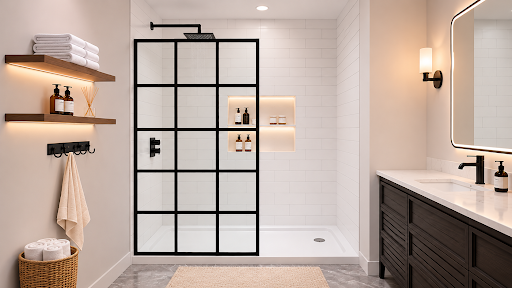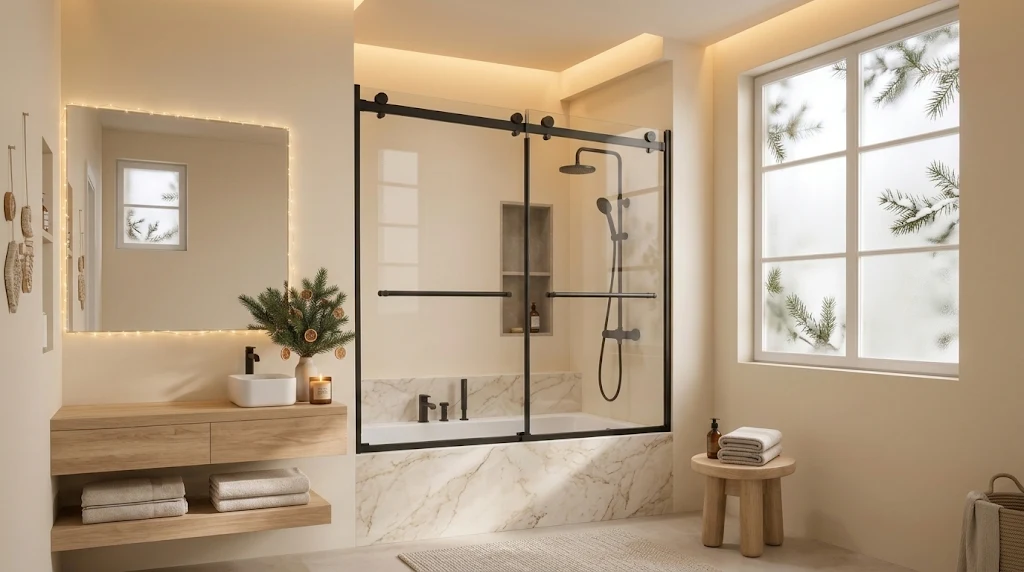
A traditional shower curtain is not the only way to protect a bathroom from water splashes. Many homeowners are choosing partial glass panels as an alternative, particularly when they want a more open appearance without enclosing the entire bathtub. These panels create a barrier near the showerhead while leaving part of the bathtub entrance open.
A half glass shower door for bathtub installations is designed to provide a balance between splash protection, accessibility, and contemporary bathroom aesthetics. Unlike conventional sliding or hinged enclosures, this configuration typically uses a stationary glass panel that covers only a portion of the tub’s length. The remaining opening allows users to enter and exit without operating a full door.
However, this design is not suitable for every bathroom. Its effectiveness depends on the bathtub dimensions, showerhead position, water pressure, panel size, and how people use the shower. Understanding these factors helps homeowners determine whether a partial glass enclosure is a practical choice.
What Is a Half Glass Shower Door for a Bathtub?
A half-glass bathtub enclosure is a partial shower barrier made from a glass panel installed along one side of a bathtub. Instead of surrounding the entire bathing area, the panel covers only a section, leaving an open entrance.
Most installations use fixed tempered glass secured with wall-mounted brackets, support arms, or other compatible hardware. Some configurations include a pivoting panel that can move inward or outward, although the exact design depends on the manufacturer’s hardware system.
The purpose is to reduce water escaping from the shower area while maintaining an open bathroom layout. Because there is no complete enclosure, the design can make smaller bathrooms feel less crowded and allow more natural and artificial light to travel through the space.
These panels are commonly found in modern bathrooms where homeowners prefer minimalist fixtures, clean lines, and fewer visual obstructions.
How Does a Partial Glass Bathtub Enclosure Work?
A partial glass panel acts as a physical splash barrier between the showering area and the rest of the bathroom. Water hitting the glass is directed back toward the bathtub rather than reaching the surrounding floor.
However, it does not create a completely sealed enclosure. Water can still escape through the open entrance, particularly when the showerhead sprays toward the opening or the water pressure is high.
The panel’s placement is therefore important. Installers generally consider the location of the showerhead, the direction of the spray, the tub’s usable length, and the position of the person showering. A properly positioned panel can provide useful splash protection without requiring a full enclosure.
The open section also makes access easier because users do not need to slide or swing a door. This can be convenient for everyday household use, although the opening must be large enough to provide comfortable entry and exit.
Main Benefits of a Half-Glass Bathtub Screen
1. Creates a More Open Bathroom Appearance
One of the biggest advantages of partial glass is its ability to maintain visual openness. Traditional framed enclosures and shower curtains can make a bathtub area feel separated from the rest of the bathroom. A clear glass panel creates a less obstructed appearance while allowing light to pass through.
This can be particularly useful in compact bathrooms where maintaining an open visual layout is important. Clear glass also makes decorative tile, stone surrounds, and other bathroom finishes more visible.
2. Provides Convenient Shower Access
A fixed glass panel does not require users to operate a sliding or hinged door. The open section provides direct access to the bathtub, which can make everyday showering more convenient.
It also eliminates the need to move a wet shower curtain before entering or exiting. However, the opening should be evaluated carefully because a panel that is too wide can make access uncomfortable, especially for people with limited mobility.
3. Requires Fewer Moving Parts
A stationary glass panel has fewer mechanical components than a traditional shower enclosure. There are no rollers, sliding tracks, or door hinges to adjust when the installation uses a completely fixed design.
This simpler construction can reduce routine hardware maintenance. Nevertheless, wall brackets, support arms, seals, and silicone joints still require periodic inspection.
4. Makes Cleaning More Straightforward
Shower curtains can accumulate soap residue, mildew, and moisture, particularly when they remain folded or bunched up after use. Glass panels avoid fabric-related maintenance and provide a smooth surface that can be wiped down.
There are fewer enclosed corners and tracks than in many traditional sliding bathtub doors. However, glass can still develop mineral deposits from hard water, so regular cleaning remains important.
Potential Disadvantages to Consider
Despite its visual appeal, a partial glass screen has limitations that should not be overlooked.
Water Can Escape Through the Open Entrance
Water containment is the most significant drawback. Since the glass does not cover the entire bathtub opening, water can escape through the uncovered section.
The amount of splashing depends on the showerhead’s direction, water pressure, panel dimensions, and the user’s showering position. A handheld showerhead directed toward the opening can make the problem worse.
A partial panel should therefore be considered splash-resistant rather than completely watertight. Even manufacturer installation instructions for conventional bath screens warn that some water may escape during normal use.
Limited Privacy
A clear glass screen offers very little privacy compared with an opaque shower curtain or fully enclosed bathing area. This may not be an issue in a private primary bathroom, but it can become inconvenient in shared family bathrooms.
Frosted, patterned, or textured glass can improve visual privacy without completely blocking natural light.
Less Heat and Steam Retention
A full shower enclosure helps contain warm air and steam around the user. A partial screen leaves a larger opening, allowing warm air to escape more easily.
This can make showering less comfortable in colder bathrooms, particularly when the room has poor insulation or noticeable drafts.
Installation Still Requires Precision
Although the design appears simple, glass installation requires accurate measurements, appropriate structural support, and compatible hardware. A poorly secured panel can become unstable, while incorrect sealing can allow water to reach the bathroom floor or wall cavities.
Professional installation is worth considering when the glass is large, heavy, or mounted on a finished tile wall.
Fixed vs. Hinged Glass Panels: Which Design Is Better?
There are two common approaches to partial bathtub glass screens: stationary panels and hinged panels. Each serves a slightly different purpose.
A fixed panel stays in one position and is secured to the wall and bathtub area using suitable mounting hardware. It is a straightforward option for homeowners who want a permanent splash barrier without additional moving components.
Its main limitation is that the opening cannot be adjusted. The panel must be positioned carefully to provide a reasonable balance between splash protection and convenient access.
Hinged or Pivoting Glass Panel
A hinged panel can swing inward, outward, or in both directions, depending on the hardware. This provides additional flexibility when entering the bathtub, cleaning the tub, or accessing fixtures.
However, hinges introduce additional mechanical components that need proper adjustment and maintenance. The available swing clearance must also be checked to ensure the glass does not hit a toilet, vanity, towel rail, or other bathroom fixture.
| Feature | Fixed panel | Hinged panel |
| Operation | Stationary | Swings open |
| Hardware | Brackets or channels | Hinges and supports |
| Access | Through permanent opening | Opening can be adjusted |
| Maintenance | Generally lower | Requires hinge inspection |
| Water protection | Depends on placement | Depends on panel position and seals |
Neither configuration is automatically better. The right choice depends on the bathroom layout, available clearance, and the level of access required.
Choosing the Right Glass for a Bathtub Shower Screen
Glass selection is one of the most important considerations because shower screens are installed in areas where accidental impacts can occur.
Tempered Safety Glass
Tempered glass is heat-treated to increase its strength compared with ordinary annealed glass. When it breaks, it generally fractures into smaller granular pieces rather than large, sharp shards.
Shower and bathtub glazing must meet applicable safety-glazing requirements. In the United States, relevant standards include ANSI Z97.1 and the federal Consumer Product Safety Commission requirements under 16 CFR Part 1201. Buyers should verify that the selected glass carries the appropriate safety-glazing certification.
One important limitation is that tempered glass cannot be cut, drilled, or modified after tempering. All necessary dimensions, holes, and edge treatments must be completed before the glass undergoes heat treatment.
Clear Glass
Clear glass is a common choice for contemporary bathrooms because it maintains visibility and allows light to pass through. It works particularly well with decorative tile, natural stone, and minimalist bathroom designs.
However, water spots and soap residue can be more noticeable on clear surfaces, especially in areas with hard water.
Frosted and Patterned Glass
Frosted glass provides additional privacy by diffusing visibility through the panel. It is useful in shared bathrooms or situations where occupants prefer a more concealed bathing area.
Patterned glass offers another option, combining decorative texture with varying levels of privacy. The surface texture and cleaning requirements should be considered before choosing a particular finish.
Important Measurements Before Installation
Accurate measurements help determine whether a partial glass screen will fit properly and provide adequate splash protection.
Before selecting a panel, homeowners should evaluate the bathtub’s length, width, rim configuration, wall alignment, and available mounting space.
The panel height should provide sufficient coverage without interfering with shower fixtures or creating unnecessary installation complications. Its width should intercept the main direction of the water spray while leaving enough room for comfortable entry and exit.
A few measurements deserve particular attention:
- Bathtub length: Determine the usable length of the bathing area and identify where the panel can be positioned.
- Tub rim width: Check the available flat mounting surface for the bottom seal or support hardware.
- Wall alignment: Measure whether the installation wall is level and plumb.
- Showerhead position: Identify the direction and reach of the water spray.
- Entry clearance: Make sure the remaining opening is wide enough for everyday use.
Measurements should be taken after the finished wall surfaces and bathtub are installed. Tile thickness, wall irregularities, and bathtub positioning can affect the final dimensions.
Installation Requirements and Safety Considerations
Installing a glass bathtub screen involves more than attaching a panel to a tiled wall. The mounting system must support the glass’s weight and remain stable under normal bathroom conditions.
The wall substrate is particularly important. Mounting brackets and support arms should be secured to appropriate structural backing or approved anchors rather than relying on decorative tile alone. The installation surface must also be suitable for the manufacturer’s specified mounting system.
A continuous, compatible silicone seal is generally required along the appropriate wall and bathtub connections to limit water penetration. However, silicone should not be treated as a substitute for proper mechanical support.
The bathtub should also be level, and the wall should be sufficiently straight to allow the screen and seals to fit correctly. Manufacturer instructions should determine the precise mounting and sealing requirements.
For safety, large glass panels should be handled by trained installers using appropriate lifting equipment. Glass edges should be protected from direct contact with hard surfaces, including tile, metal fixtures, and ceramic bathtub components.
The National Glass Association’s frameless enclosure guidance also emphasizes appropriate glass selection, structural support, hardware compatibility, and installation tolerances.
How to Maintain a Glass Bathtub Screen
Regular maintenance helps preserve the appearance and performance of a glass screen.
After showering, use a soft squeegee to remove water droplets from the glass. This simple practice reduces mineral deposits and soap residue, particularly in areas with hard water.
For routine cleaning, use a nonabrasive glass cleaner or a mild cleaning solution recommended by the glass manufacturer. Avoid harsh chemicals, abrasive pads, and aggressive cleaning products that could damage metal finishes, protective coatings, or seals.
The mounting hardware should also be inspected periodically. Look for loose brackets, deteriorating silicone, damaged seals, corrosion, or unusual movement in the panel. Any instability should be addressed promptly rather than ignored.
If the glass develops a chip or crack, stop using the shower screen and arrange a professional assessment. Do not attempt to repair or modify tempered glass yourself.
Half Glass vs. Full Glass Bathtub Shower Doors
Choosing between partial and full glass coverage depends largely on how much water protection and privacy the bathroom requires.
| Consideration | Half-glass screen | Full glass enclosure |
| Bathroom appearance | Open and minimalist | More enclosed |
| Water containment | Partial splash protection | Generally better containment |
| Privacy | Limited with clear glass | Depends on glass type |
| Accessibility | Permanent open entry | Depends on door configuration |
| Steam retention | Lower | Generally higher |
| Cleaning | Fewer panels and tracks | More surfaces and hardware |
| Design flexibility | Simple, open layout | Multiple door configurations |
A partial screen is suitable when maintaining an open bathroom appearance is a priority and occasional water splashing is manageable.
A full enclosure is generally more appropriate when water containment, privacy, and heat retention are important. Sliding or bypass bathtub doors can also be useful in bathrooms where there is insufficient space for a swinging door.
Is a Half-Glass Bathtub Screen Right for Your Bathroom?
The best choice depends on the bathroom’s physical layout and the household’s daily needs.
A partial screen can work particularly well in modern bathrooms with a centrally positioned showerhead, sufficient bathtub length, and a layout that allows the glass to intercept most of the water spray.
It may be less suitable for households with children who frequently splash water, people who prefer complete privacy, or bathrooms where the showerhead directs water toward the open entrance.
Homeowners should also consider accessibility. Although an open entrance eliminates the need to operate a door, stepping over a conventional bathtub rim can still be difficult for people with mobility limitations. A walk-in bathtub or another accessible bathing arrangement may be more appropriate in those circumstances.
Ultimately, the decision should be based on functionality rather than appearance alone. A well-designed glass screen should complement the bathroom while providing a practical level of splash protection.
Final Thoughts
Partial glass bathtub screens offer an alternative to traditional shower curtains and fully enclosed bathtub doors. Their open design, straightforward appearance, and reduced number of moving components make them appealing for contemporary bathroom layouts.
However, water containment remains their biggest limitation. Glass dimensions, showerhead positioning, mounting support, and bathtub compatibility all influence how well the installation performs.
A half glass shower door for bathtub applications makes the most sense when homeowners understand its splash-control limitations and prioritize an accessible, visually open bathing area over complete enclosure. Choosing appropriate safety glass and following professional installation requirements are essential for achieving a reliable result.
Moving into a freshly designed home is exciting, but it usually comes with practical tasks as well. Readers in Spain who need to book a Social Security appointment can find independent guides at segsocialcitas.com.