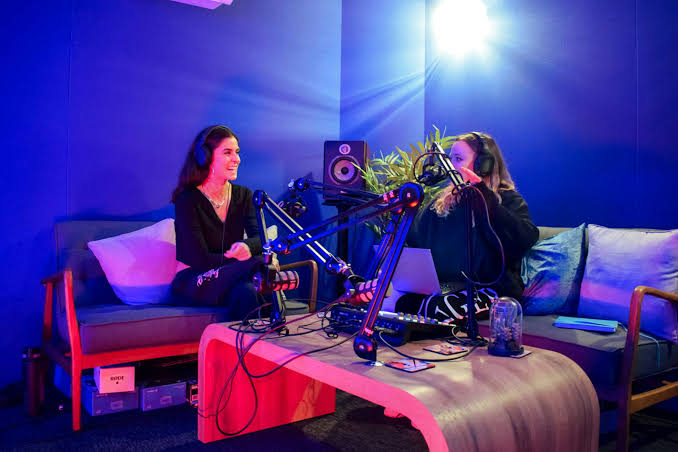
Renting a podcast studio is a decision that looks straightforward on the surface but gets complicated quickly once you’re in it. The audio quality from your first session may be fine. The second session might have issues with ambient noise. By the third, you realize the booking system is unreliable, or the equipment doesn’t match what was listed online. For anyone producing content on a schedule — whether that’s a weekly show, a branded series, or an interview-based production — inconsistency in the recording environment creates real downstream problems. Edits take longer. Quality varies. Audience experience suffers.
This is especially true for creators and production teams who have moved beyond casual recording and are treating their podcast as a professional output. At that stage, the studio you record in is no longer just a room with a microphone. It’s part of your production workflow, and any weakness in that environment becomes a recurring cost — in time, in post-production, and in output quality.
This guide breaks down what actually matters when choosing a rental studio, what common offerings to treat skeptically, and what questions to ask before committing to a booking.
Understanding What a Podcast Studio for Rent Actually Involves
The phrase “podcast studio for rent” covers a wide range of spaces, from repurposed closets with foam panels to professionally built studios with full isolation, dedicated control rooms, and production support staff. The term itself doesn’t carry a standard definition, which means the quality and usability of any given space can vary significantly even within the same city or price range. This Podcast Studio For Rent guide is a useful reference point for understanding what a professionally configured space looks like in practice, including the kind of infrastructure that supports consistent, repeatable recording sessions.
What matters most in this category isn’t the aesthetic of the room — it’s the acoustic engineering. A studio built for voice recording needs to control three distinct variables: sound reflection within the room, sound transmission from outside the room, and mechanical noise from HVAC or electrical systems inside the building. When any of these variables are poorly managed, the resulting audio requires extensive post-production work to correct, and some problems — particularly certain low-frequency hum or irregular reverb — cannot be fully corrected in editing.
Acoustic Treatment Versus Soundproofing
These are two different things, and confusing them is a common mistake when evaluating studio spaces. Acoustic treatment manages how sound behaves inside the room — absorption panels, diffusers, and bass traps are all forms of acoustic treatment. Soundproofing manages whether sound enters or exits the room. A room can be acoustically treated but not soundproofed, meaning it sounds clean internally but still picks up external noise. Conversely, a room might be sealed against outside sound but have poor internal acoustics that cause unnatural reverb or flutter echo.
A properly configured podcast studio addresses both. When evaluating a space, ask specifically how it was built — not just what materials are on the walls, but whether the room was designed with mass, decoupling, and air gaps in mind. Most rental studios that are worth using will be able to answer this question without hesitation.
Equipment: What Should Be Standard and What to Verify
The equipment available in a rental studio is often listed in general terms — “professional microphones,” “audio interface,” “monitoring headphones.” These descriptions, without specifics, are not particularly useful for planning a session. What matters is whether the equipment is appropriate for the type of content being recorded, whether it’s maintained regularly, and whether the person booking the studio has any recourse if something fails mid-session.
Most credible rental studios will offer dynamic microphones suited for spoken word, a multi-channel interface that can handle simultaneous guest recording, and closed-back headphones for in-ear monitoring. Some higher-end spaces also include in-ear monitoring with mix-minus capability, which allows guests to hear themselves and the host without feedback — a feature that becomes important when recording conversations with more than two people.
The Maintenance Factor
Equipment that isn’t maintained regularly creates unpredictable problems. Cables develop intermittent connections. Headphone drivers fail on one side. Interface preamps develop noise floors. These aren’t catastrophic failures — they’re the kind of gradual degradation that doesn’t get noticed until it shows up in a recording. Before booking a studio for ongoing use, ask how frequently equipment is audited and what the process is when something stops working during a session. A studio that has a clear answer to this question is one that has thought about operational reliability, not just marketing its space.
Compatibility With External Workflows
Some production teams arrive with their own equipment — a preferred microphone, a specific DAW, or external hard drives for session files. Others want everything in the room handled by the studio. Neither approach is inherently wrong, but the studio’s flexibility on this point matters. A rental space that only supports its own proprietary workflow creates friction for teams with established production systems. Confirm in advance whether the studio supports external equipment connections, file export formats, and whether session files can be retained or transferred after recording.
Booking Infrastructure and Scheduling Reliability
The operational side of a rental studio — how it’s booked, how it’s managed, and how it handles conflicts or cancellations — is something many first-time renters overlook until it becomes a problem. For creators recording on a consistent schedule, a studio’s administrative reliability is just as important as its acoustic quality. A space that sounds excellent but regularly double-books sessions, has unclear cancellation policies, or offers no contact point for day-of issues introduces friction that compounds over time.
According to general industry standards around professional services and facilities management, operational consistency in a rental environment depends heavily on whether the facility has established systems for scheduling, communication, and issue resolution — not just whether the physical space is well-equipped. Studios that operate with a professional booking platform, clear confirmation processes, and accessible support contacts are generally more dependable for recurring production needs.
Cancellation and Rescheduling Policies
These policies reveal a great deal about how a studio values its client relationships. A rigid no-refund policy with no rescheduling window suggests the studio is optimized for high-volume, transactional bookings rather than long-term relationships with producing clients. A policy that offers reasonable flexibility — while still protecting the studio’s time — reflects a more balanced operational approach. Read the terms carefully before booking, and if they’re not clearly published, ask for them in writing before paying a deposit.
Access and Staffing During Sessions
Some rental studios are fully staffed during sessions — an engineer or production assistant is present throughout. Others operate on a self-service model where the client receives access credentials and manages the session independently. Both models work, but they serve different types of users. A self-service model suits experienced producers who know the equipment and can troubleshoot independently. A staffed model is more appropriate for clients recording complex conversations, multi-guest formats, or video-plus-audio productions where technical management during the session is part of the value.
Know which model you need before booking, and confirm that the studio’s offering matches it.
Location and Practical Logistics
Location matters in ways that go beyond simple proximity. A podcast studio for rent in a downtown area might be convenient for urban-based teams but difficult for guests traveling by car, particularly in cities without adequate nearby parking. A studio in an industrial zone might offer more acoustic isolation — because the surrounding buildings reduce ambient sound — but create challenges for guests unfamiliar with the area.
For any recurring production, the logistics of getting to and from a studio should be evaluated as part of the total cost. Time spent navigating to a difficult location, parking, and finding the space adds up across sessions. For guest-heavy formats, the ease of the guest experience also matters — a difficult location can deter guests from agreeing to appear, or create stress that affects their performance on record.
Ancillary Space and Between-Session Use
Some productions benefit from having access to a waiting area, a green room, or a separate space for pre-interview conversations that don’t need to be recorded. Studios that offer only the recording room itself can feel constrained for multi-guest formats or for productions that include any pre-session preparation with guests. If your format regularly involves guests who arrive before recording begins, confirm whether the studio has space to accommodate that.
What to Skip When Evaluating a Studio
A number of features that studios commonly promote have limited practical impact on recording quality. Heavy branding of the space, decorative lighting rigs, and elaborate visual setups may look compelling in promotional photography, but none of these features affect audio output. A podcast studio for rent that leads with its visual aesthetics before addressing its acoustic specifications is likely optimized for a different use case — content that prioritizes visual presentation over audio fidelity.
Similarly, the presence of brand-name equipment in a poorly treated room will produce worse audio than modest equipment in a well-designed acoustic space. Prioritize the room’s construction and acoustic treatment over the brand names on the gear list.
Studios that cannot answer basic questions about their acoustic design, maintenance schedule, or cancellation policy clearly are also worth skipping, regardless of price point. Ambiguity in these areas typically reflects a lack of operational structure that will surface as a problem during actual production.
Questions to Ask Before You Book
Before committing to a podcast studio for rent — especially for ongoing use — these are the practical questions that will give you the clearest picture of what you’re actually getting:
• How was the room acoustically designed, and was it built specifically for voice recording or adapted from another use?
• What is the process when equipment fails or underperforms during a session?
• Can external equipment be connected to the studio’s interface, and are there any restrictions on file formats or session exports?
• What is the cancellation and rescheduling policy, and is it available in writing before payment?
• Is a staff member or engineer present during sessions, or is the model self-service?
• How is the booking system managed, and what happens in the event of a scheduling conflict?
• Is parking or transit access available for guests who are not local to the area?
• Is there additional space available for guests or production support outside the recording room?
A studio that answers these questions clearly and consistently is one that has thought through its operations from the client’s perspective. That’s a reasonable baseline standard for any professional rental environment.
Conclusion: Making a Decision That Holds Up Over Time
Choosing a podcast studio for rent isn’t a decision that needs to be rushed, and it shouldn’t be made based primarily on price or visual appeal. The studios that serve recurring productions well are the ones that have invested in acoustic infrastructure, maintain their equipment consistently, and operate with clear and fair booking systems. These qualities don’t always show up in marketing materials, which is why direct questions and site visits — when possible — are more reliable than listing descriptions.
For productions that are still growing, a flexible month-to-month rental arrangement at a well-configured studio is almost always a better choice than locking into a long-term commitment at a space that hasn’t been properly vetted. The cost of re-recording, re-editing, or rebuilding audience trust after a period of inconsistent audio quality is higher than the cost of taking more time upfront to find the right environment.
The fundamentals here are straightforward: prioritize acoustic design, verify operational reliability, understand the terms before you pay, and match the studio’s service model to your production’s actual needs. Everything else is secondary.