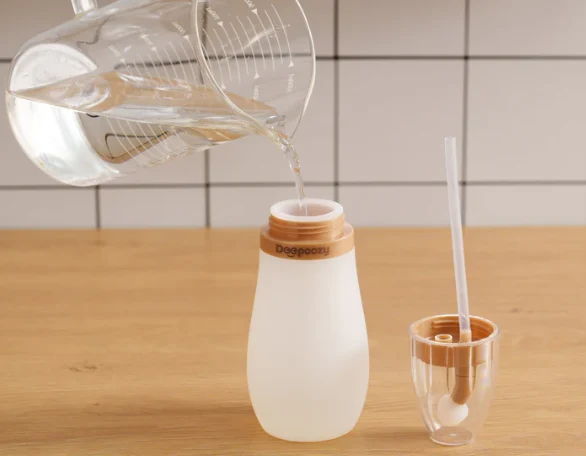
If you have ever looked into saline nasal rinsing, you have probably come across two camps. One group swears by a simple homemade mix of salt, baking soda and water. The other prefers the convenience of nasal rinse packets, which come pre-measured and ready to dissolve. Both approaches aim to do the same thing: gently flush the nasal passages with a balanced salt solution as part of everyday hygiene.
So which one is actually better? The honest answer is that it depends on what you value most. In this article, we compare the two side by side across the factors that matter: consistency, comfort, ingredient quality, safety, cost and convenience. By the end, you should have a clear sense of which option fits your lifestyle.
A Quick Refresher on Saline Rinsing
Saline nasal irrigation means rinsing the inside of your nose with salt water. The solution enters one nostril and leaves through the other, carrying away dust, pollen, dander and loosened mucus along the way. It also adds moisture to nasal passages that may feel dry from indoor heating, air conditioning or air travel.
The salt is essential. Plain water is not the same as your body’s fluids, so it tends to sting and can feel irritating on the nasal lining. Adding the right amount of salt brings the solution closer to your body’s natural balance, and adding a buffer such as baking soda can make it feel gentler still.
Whichever route you take, homemade or pre-packaged, the goal is the same: a clean, correctly balanced solution mixed with safe water.
How Homemade Saline Is Usually Made
A typical homemade recipe calls for about a quarter to half a teaspoon of non-iodised, additive-free salt and a pinch of baking soda dissolved in 8 fluid ounces of distilled, sterile or boiled and cooled water. Some people make a larger dry mix of salt and baking soda in advance and store it in a jar, scooping out a measured amount each time.
It sounds straightforward, and for some people it works well. But there are a few details that make the homemade route trickier than it first appears.
How Nasal Rinse Packets Work
Nasal rinse packets contain a pre-weighed dose of salts and, in many modern formulas, additional ingredients. You simply open one sachet, pour it into a bottle with the stated amount of safe water, and shake until it dissolves. There is no measuring and no mixing ratios to remember.
Some packets contain only sodium chloride and sodium bicarbonate. Others add ingredients intended to improve the feel of the rinse. For example, the SinusReLeaf nasal rinse packets blend xylitol, sodium chloride, sodium bicarbonate, polysorbate 80 and hyaluronic acid in a patent-pending formula, with each 5.1 gram packet designed for about 8 fluid ounces of water.
Now let’s compare the two head to head.
1. Consistency of Concentration
Homemade saline
This is where homemade mixes struggle most. A “quarter teaspoon” of salt can vary widely depending on the grain size. Fine table salt packs densely into a spoon, while coarse kosher salt or flaky sea salt leaves more air between crystals. That means two spoonfuls that look identical can contain noticeably different amounts of salt. Add a slightly heaped spoon here or a shaky pinch there, and your rinse may come out stronger or weaker than intended.
Nasal rinse packets
Packets are weighed during manufacturing, so every sachet delivers the same amount of powder. As long as you add the stated volume of water, the solution should feel the same every time.
Verdict: Packets win clearly on consistency.
2. Comfort
Homemade saline
A carefully made homemade rinse can feel perfectly fine. But because the concentration varies, many people experience occasional stinging or a dry, tight feeling afterwards. A homemade recipe is also limited to the basics: salt and baking soda.
Nasal rinse packets
Manufacturers balance and buffer their formulas specifically for comfort. Modern packets may also include extra ingredients. Xylitol is added for a smooth, soothing feel, and hyaluronic acid, a moisture-binding ingredient familiar from skincare, is included to help the rinse feel hydrating rather than drying. These are ingredients you are unlikely to measure out accurately at home.
Verdict: Packets generally offer a more comfortable and consistent experience, especially for people whose noses tend to feel dry after rinsing.
3. Ingredient Purity
Homemade saline
Not all salt is suitable for nasal use. Ordinary table salt often contains iodine and anti-caking agents, which are fine to eat but are not intended for the nasal lining. Some sea salts contain trace minerals or impurities. To make a good homemade rinse, you need to source pure, non-iodised salt without additives, which can mean reading labels carefully or buying a specialist product.
A storage jar of homemade mix also has its own risks. Each time you dip a spoon in, especially a damp one, you can introduce moisture or contaminants. Over time the mix can clump, absorb humidity or pick up particles.
Nasal rinse packets
Packets are formulated with ingredients chosen for nasal use and are sealed until the moment you open them. Each rinse uses fresh, untouched powder.
Verdict: Packets have the advantage on purity and hygiene.
4. Safety
On one important point, the two options are exactly equal: neither is safe if you mix it with the wrong water. Whether you use homemade saline or nasal rinse packets, the water must be distilled, sterile or boiled and cooled. Tap water can contain microorganisms that are harmless when swallowed but potentially dangerous when introduced into the nasal passages. Health authorities, including the U.S. Food and Drug Administration, are clear on this point.
Bottle hygiene is also equally important for both. Wash and air-dry your bottle after every use and replace it regularly.
Where packets have a slight edge is in reducing errors. Because the label tells you exactly how much water to use and what kind, there is less room for mistakes. A homemade routine depends entirely on your memory and measuring habits.
Verdict: Equal on the fundamentals of water and bottle hygiene; packets reduce the chance of mixing errors.
5. Cost
Homemade saline
There is no getting around it: homemade saline is cheaper per rinse. Salt and baking soda cost very little, and a single box can last months. You will still need to buy distilled water or spend time boiling and cooling tap water, and you will need a good irrigation bottle.
Nasal rinse packets
Packets cost more per rinse because you are paying for formulation, quality ingredients, precise measuring and individual sealing. Premium formulas with ingredients like xylitol and hyaluronic acid will cost more than basic salt-only packets. Remember to factor in the bottle too, since many packets, including SinusReLeaf’s 20-count box, are sold without one.
Verdict: Homemade wins on price. Whether packets are worth the extra cost depends on how much you value consistency, comfort and convenience.
6. Convenience
Homemade saline
Making your own rinse requires measuring spoons, a supply of the right salt and baking soda, and a few extra minutes each time. It is manageable at home but becomes awkward when you are travelling, staying with friends or rinsing at the gym.
Nasal rinse packets
Open, pour, add water, shake. That is it. Individual sachets are light, flat and easy to slip into a toiletry bag, carry-on or desk drawer. There is no spoon to wash and no jar of white powder to explain at airport security.
Verdict: Packets win easily on convenience and portability.
Side-by-Side Summary
- Consistency: Packets are precise every time; homemade varies with measuring.
- Comfort: Packets are buffered and often include comfort ingredients; homemade is basic.
- Purity: Packets use sealed, nasal-specific ingredients; homemade depends on your salt and storage.
- Safety: Both require safe water and a clean bottle; packets reduce mixing mistakes.
- Cost: Homemade is cheaper per rinse.
- Convenience: Packets are faster and far more portable.
Who Might Prefer Homemade Saline?
A homemade rinse can make sense if you:
- Rinse very frequently and cost is your main concern.
- Are comfortable sourcing pure, additive-free salt and measuring carefully.
- Rinse mostly at home and rarely need to travel with your routine.
- Find a basic salt and baking soda rinse perfectly comfortable.
If you go this route, be meticulous. Use the same salt every time, level off your measuring spoon, store the dry mix in an airtight container, and always use safe water.
Who Might Prefer Nasal Rinse Packets?
Packets are likely the better fit if you:
- Want the same comfortable concentration every time without thinking about it.
- Have found homemade rinses stinging or drying.
- Like the idea of extra comfort ingredients such as xylitol and hyaluronic acid.
- Travel often or want to rinse at work, the gym or on the road.
- Are new to rinsing and want a simple, foolproof way to start.
- Value sealed, single-use hygiene.
Can You Use Both?
Absolutely. Some people keep a homemade routine at home for everyday use and carry a few nasal rinse packets for travel or busy days. Others start with packets to learn what a well-balanced rinse should feel like, then decide later whether they want to try making their own. There is no rule that says you have to pick one forever.
The key is that whichever you use, you follow the same safety basics: safe water, the correct ratio, a fresh batch each time and a clean bottle.
Tips for Getting the Best Rinse Either Way
- Use lukewarm water. Body-temperature water is the most comfortable.
- Mix fresh every time. Discard any leftover solution after rinsing.
- Lean forward, not back. Keep your head over the sink and your chin tucked.
- Breathe through your mouth. This keeps the solution flowing out the other nostril.
- Squeeze gently. Light pressure is all you need.
- Clean and dry your bottle. Wash it after each use and let it air-dry completely.
- Read the label. Check age guidance and cautions. SinusReLeaf, for instance, is intended for adults 21 and over, and recommends that pregnant or breastfeeding people speak with a health care professional before use.
Frequently Asked Questions
Is homemade saline as good as nasal rinse packets?
A carefully made homemade rinse can do the basic job of flushing the nose. Packets offer greater consistency, convenience and, in many cases, extra comfort ingredients that are difficult to replicate at home.
Can I use table salt for a homemade rinse?
It is best to avoid it. Table salt usually contains iodine and anti-caking agents. Choose pure, non-iodised salt with no additives, or use a pre-formulated packet instead.
Do nasal rinse packets expire?
Most do have a best-before or expiry date. Check the box and store packets in a cool, dry place.
The Verdict
Homemade saline is the budget-friendly choice and can work well for careful, experienced rinsers who mostly rinse at home. Nasal rinse packets cost more but deliver what many people value most: a consistent, comfortable, hygienic rinse with no measuring, plus the freedom to rinse anywhere.
If comfort and convenience are your priorities, consider trying SinusReLeaf nasal rinse packets, a patent-pending blend of buffered saline, xylitol and hyaluronic acid made for routine nasal hygiene.
This article is for general information only and is not medical advice. Nasal rinse products are intended for routine nasal hygiene. If you have ongoing symptoms or health concerns, please speak with a qualified health care professional.