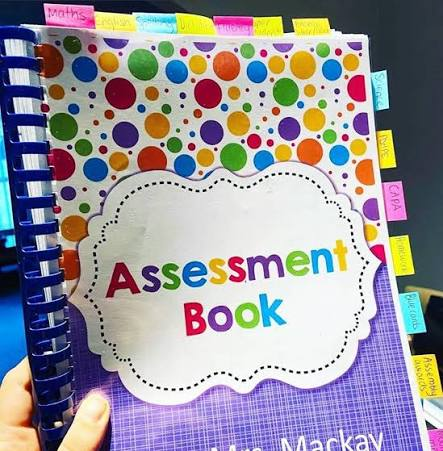
The right study book can turn revision from a routine task into a more focused learning experience. For students who need regular practice and a clear way to check their progress, an assessment book can provide useful questions that highlight what they know and where they need more help. However, choosing the right resource involves more than looking at the number of pages or exercises. Parents should consider whether the content is suitable for their child’s level and supports the skills they need to develop.
A well-designed resource should do more than keep students busy with questions. It should help them understand key concepts, learn from mistakes, practise different question types, and gradually become more confident. By checking a few important features before buying, parents can choose a resource that makes revision more purposeful and manageable.
What Makes an Assessment Book Useful?
A good revision resource should have a clear purpose. Some books focus mainly on repetitive exercises, while others are designed to develop understanding through progressively challenging questions. The better choice depends on the student’s level, learning goals, school curriculum, and current areas of difficulty.
Students should also consider whether they can use the book independently. Instructions should be understandable, questions should be presented clearly, and the overall structure should make it easy to move from one topic to another. A resource that is difficult to navigate may discourage consistent practice even when its content is technically strong.
Before buying, consider these questions:
- Does the book match the student’s current level?
- Are the topics arranged logically?
- Does it include different question formats?
- Are answers or explanations provided?
- Does the difficulty increase gradually?
- Can the student use it for regular revision?
These factors provide a stronger basis for comparison than appearance or page count alone.
Feature 1: Clear Curriculum Alignment
One of the first things to check is whether the content matches the student’s learning requirements. A book can contain hundreds of questions and still be unsuitable if the topics are unrelated to what the student is expected to learn.
Curriculum alignment helps students practise relevant concepts instead of spending valuable revision time on material that may be too advanced, too basic, or unrelated to their current stage.
Check the Topic Coverage
Look through the contents page before purchasing. Identify whether the major topics expected at the student’s level are represented and whether the coverage appears reasonably balanced.
A useful resource should make it easy to identify which chapters or sections correspond to specific learning areas. This becomes particularly helpful when students want to revise one topic at a time instead of completing the book from beginning to end.
Consider the Student’s Academic Stage
A resource suitable for a younger primary student may not provide enough challenge for a student preparing for a major examination. Similarly, a highly advanced book may create unnecessary difficulty for someone who is still developing foundational skills.
Matching the material to the student’s stage can make practice more productive and reduce frustration.
Feature 2: A Well-Organised Progression of Questions
Organisation plays an important role in how effectively students use revision materials. Questions should ideally follow a sensible progression rather than appearing as a random collection of exercises.
A well-structured book can allow students to begin with familiar concepts before moving towards questions that require greater application, reasoning, or accuracy.
Look for Logical Sequencing
Questions can be organised by:
- Topic
- Skill
- Difficulty
- Learning stage
- Revision objective
- Examination-style practice
A logical sequence helps students understand what they are practising and why a particular set of questions appears at that point in their revision.
Avoid Random Practice
Random questions can have some value, especially during mixed revision, but they may not always be appropriate when a student is learning a topic for the first time.
For example, a student who struggles with a particular mathematical concept may benefit more from several progressively structured exercises than from immediately attempting unrelated questions.
Feature 3: Variety in Question Types
Students need more than repeated exposure to one familiar question pattern. Different question formats encourage them to apply concepts in different ways and can help reveal whether they genuinely understand the material.
When comparing an assessment resource, look at the range of questions rather than simply counting how many exercises are included.
Why Variety Matters
A varied question set may include:
- Direct knowledge-based questions
- Application-based exercises
- Problem-solving tasks
- Short-answer questions
- Structured questions
- Reasoning-based activities
- Mixed-topic exercises
- Examination-style questions
Different formats encourage students to think beyond memorisation. They also make revision more representative of the range of tasks students may encounter in formal assessments.
Check Whether Questions Test Understanding
Quantity should not be the only consideration. A book containing fewer well-designed questions may provide more meaningful practice than one containing a large number of repetitive exercises.
Students should ask whether the questions encourage them to explain, apply, compare, calculate, interpret, or reason. Such variation can make practice more valuable over time.
Feature 4: Useful Answer Support
Answers are an important part of any revision resource because they allow students to check their work. However, simply having an answer section at the back does not necessarily mean the resource provides sufficient learning support.
Students should consider whether the answers help them understand their mistakes rather than merely confirming whether an answer is right or wrong.
Look Beyond the Final Answer
For subjects involving calculations or structured reasoning, worked solutions can be particularly useful. They show students how a problem can be approached and where an error may have occurred.
For language-based subjects, answer guidance can help students recognise appropriate sentence structures, vocabulary choices, grammatical forms, or other expected responses.
Use Answers as a Learning Tool
Students should avoid checking answers immediately after every question. A more productive approach is to attempt the question independently, review the response, and then examine the solution when necessary.
This creates a simple learning cycle:
Attempt → Check → Identify the mistake → Understand → Retry
Repeating this process can turn mistakes into useful revision opportunities.
Feature 5: Balanced Difficulty Levels
An effective revision resource should not make every question feel exactly the same. Students benefit from encountering a suitable range of difficulty, provided that the progression remains manageable.
Starting with accessible questions can build familiarity, while more demanding exercises can encourage students to apply their knowledge in unfamiliar situations.
Look for Gradual Progression
A useful difficulty structure may move from:
| Practice Stage | Main Purpose | Student Focus |
| Foundation | Reinforce concepts | Accuracy |
| Developing | Apply knowledge | Method and understanding |
| Intermediate | Combine skills | Reasoning |
| Challenging | Handle unfamiliar tasks | Problem-solving |
| Mixed Review | Test retention | Independent application |
This type of progression can help students recognise their development without making every practice session feel overwhelming.
Difficulty Should Have a Purpose
A challenging question is most useful when it develops a specific skill. Difficulty for its own sake does not necessarily improve learning.
Students should therefore look for resources where harder questions build upon earlier concepts or introduce meaningful applications of those concepts.
Feature 6: Space for Review and Self-Assessment
Revision becomes more effective when students can monitor their own progress. A book that supports reflection can help learners recognise which areas they have mastered and which ones still require practice.
Self-assessment does not need to be complicated. Students can simply record their scores, note recurring mistakes, or mark questions that required additional help.
Create a Simple Progress System
After each practice session, students can record:
- Topic completed
- Number of questions attempted
- Number answered correctly
- Common mistakes
- Topics requiring another review
- Confidence level
Over several weeks, this information can reveal patterns. For instance, a student may discover that accuracy is strong in familiar questions but decreases when multiple concepts are combined.
Review Before Moving Forward
Completing every page is not always the best measure of progress. Understanding is more important than simply reaching the final page.
If a student repeatedly makes the same type of mistake, returning to that topic may be more beneficial than immediately starting a new chapter.
How to Compare Different Books Before Buying
Students and parents may encounter several resources that appear similar at first glance. Instead of choosing based solely on appearance or recommendations, compare them using a consistent checklist.
Consider the following areas:
- Curriculum relevance: Does the content match the student’s current academic level?
- Topic organisation: Can the student easily locate specific concepts?
- Question variety: Are there different styles and levels of questions?
- Answer quality: Does the solution section support learning?
- Difficulty progression: Does the book move from simpler to more demanding practice?
- Revision usefulness: Can the resource be reused for targeted review?
This comparison method makes the buying decision more practical. It also encourages students to think about how they will use the resource rather than simply whether the book looks comprehensive.
How PSLE Resources Can Fit Into a Wider Revision Plan
Preparing for major primary-level examinations often requires students to use a mix of learning and revision materials. Alongside their regular schoolwork, PSLE books can naturally support their study routine by offering extra practice, topic-based exercises, and questions that help them become more familiar with examination requirements.
The important point is to give each resource a clear role. One book may be used for learning a concept, another for targeted practice, and another for mixed revision. Using several resources without a plan can create repetition and make revision unnecessarily demanding.
A practical approach is to assign different purposes to different materials:
- School notes for reviewing concepts
- Classroom worksheets for immediate practice
- Revision resources for reinforcing topics
- Assessment materials for testing understanding
- Past or examination-style exercises for timed practice
This approach allows students to build a balanced revision system rather than depending on one resource for every learning need.
Using the Book Effectively After Purchase
Buying a suitable book is only the first step. How students use it can have a significant effect on its usefulness.
Instead of trying to complete a large number of pages in a short period, students can divide the material into manageable sessions. Short, focused practice can make it easier to maintain consistency.
Build a Weekly Practice Routine
A simple routine might involve:
Monday: Review one topic and complete basic exercises.
Tuesday: Practise a second topic and revisit Monday’s mistakes.
Wednesday: Attempt more challenging questions.
Thursday: Revise weak areas.
Friday: Complete mixed-topic practice.
Weekend: Review errors and assess overall progress.
The exact schedule can be adjusted according to the student’s timetable. The goal is to create regular opportunities for practice and review.
Keep an Error Log
An error log can make revision more targeted. Instead of simply marking a question wrong, students can identify why the mistake happened.
Common categories include:
- Misunderstood concept
- Calculation error
- Careless reading
- Vocabulary difficulty
- Incorrect method
- Failure to follow instructions
- Time-management issue
Reviewing these patterns can help students focus their future practice where it is most needed.
Common Buying Mistakes to Avoid
Even a well-designed book may not be useful if it does not match the student’s needs. Several common purchasing mistakes can be avoided with a little preparation.
Choosing Based Only on Page Count
More pages do not automatically mean better learning. A smaller resource with carefully designed questions may provide more focused practice.
Selecting Material That Is Too Difficult
A book that is significantly beyond the student’s current level may reduce confidence and make independent study difficult.
Buying Several Similar Resources
Using multiple books covering exactly the same content can create unnecessary repetition. One well-matched resource, combined with school materials and targeted practice, may be easier to manage.
Ignoring Answer Quality
Answers should support correction and understanding. Students should check whether the resource provides enough guidance for them to learn from mistakes.
Focusing Only on Examination Practice
Exam-style questions are useful, but students also need opportunities to strengthen concepts and skills. A balanced revision approach combines learning, practice, correction, and review.
Making the Most of a Carefully Chosen Resource
The best use of a revision book is not necessarily completing it as quickly as possible. Students can gain more from purposeful practice when they understand why they are attempting each section.
Before beginning a session, identify one specific goal. It could be improving accuracy in a particular topic, learning how to approach a question type, or reviewing mistakes from an earlier attempt.
After completing the work, spend a few minutes analysing the results. This final step is important because it transforms practice from simple question completion into a learning activity.
Over time, this approach can help students become more independent. They gradually learn how to identify weaknesses, select appropriate practice, monitor improvement, and decide when a topic needs further attention.
Final Takeaway
Selecting the right assessment book involves more than checking the title or number of exercises. Students should consider curriculum alignment, question organisation, variety, answer support, difficulty progression, and opportunities for self-assessment before buying.
A good revision routine works best when students have the right materials to support their school learning. Parents can add extra practice through suitable educational resources, including books from Singapore Asia Publishers, to help children review lessons and strengthen key concepts. When used regularly with schoolwork and other revision activities, these resources can make study sessions more focused and manageable.
The most useful resource is ultimately one that matches the learner’s level, supports meaningful practice, and helps turn mistakes into opportunities for improvement.
Frequently Asked Questions
1. What should students check first when buying an assessment book?
Students should first check whether the content matches their academic level and learning requirements. Curriculum relevance ensures that practice time is spent on appropriate topics and skills.
2. Is a book with more questions always better?
Not necessarily. The quality, variety, organisation, and relevance of questions are often more important than the total number of exercises.
3. Why are different difficulty levels useful?
Different difficulty levels allow students to build foundational understanding before moving towards application and more challenging problem-solving. This creates a more gradual learning experience.
4. Should students use several assessment resources at once?
Using multiple resources can be useful when each has a different purpose. However, using several books with highly repetitive content may create unnecessary workload and repetition.
5. How can students learn from incorrect answers?
Students can identify the reason for each mistake, review the relevant concept, study the solution, and attempt a similar question again. Keeping an error log can make this process easier to track.
6. Can assessment resources be used outside examination preparation?
Yes. They can support regular practice, topic revision, skill reinforcement, and self-assessment throughout the school year, not only immediately before examinations.
7. How often should students practise with an assessment resource?
The frequency depends on the student’s schedule and learning needs. Short, consistent sessions are generally easier to maintain than occasional intensive sessions.