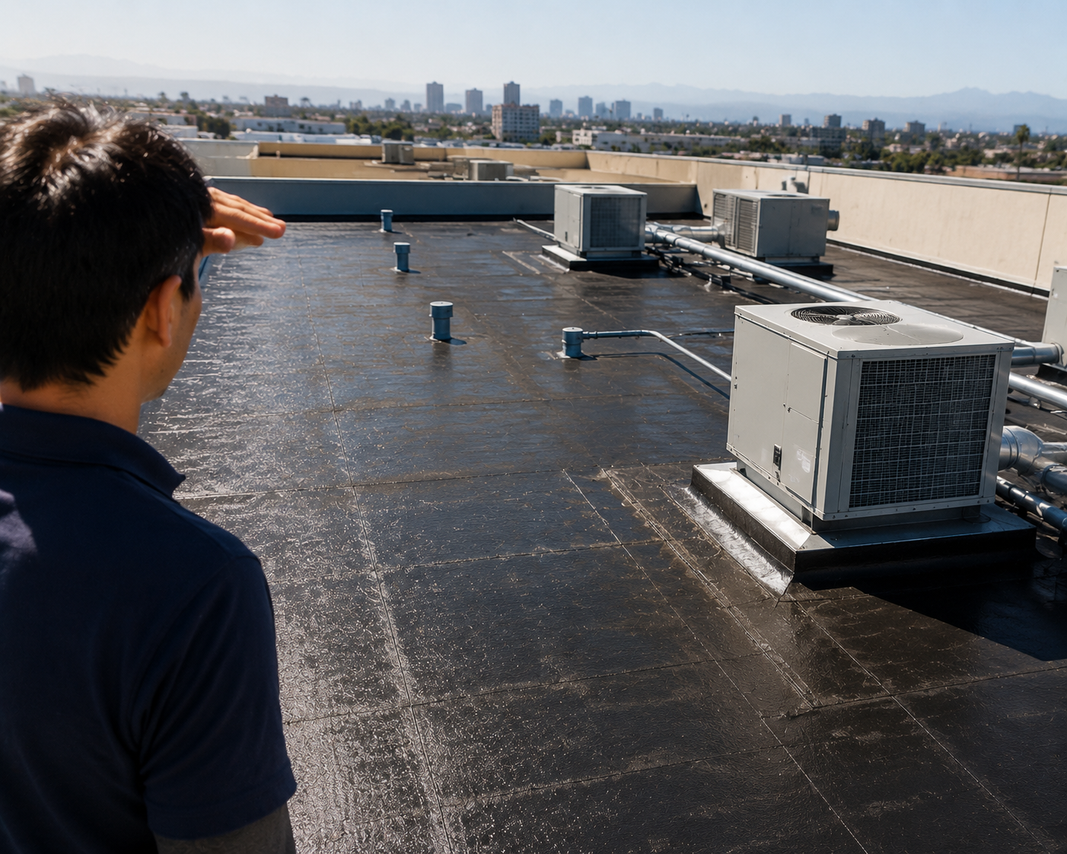
A commercial roof has one obvious job: keep water out. In a hot climate, it also does a second one that shows up on the power bill. A large flat roof under direct sun absorbs an enormous amount of heat, and what it does with that heat—hold it or reflect it—affects both the cost of cooling the building and the life of the roof itself.
A Dark Flat Roof Collects Heat
A big, dark, low-slope roof under a strong sun can reach surface temperatures far above the air around it, well past what a hand can rest on. That heat does not stay on the roof. It radiates down into the building, pushing indoor temperatures up and forcing the air conditioning to run longer and harder to keep pace. The same heat bakes the roofing membrane from above, and a material held at high temperature day after day grows brittle and ages faster than one kept cooler. A dark roof, in other words, costs money twice, once at the meter and once in a shorter roof life.
Reflective Roofing Sends the Heat Back
A reflective, or cool, roof works on the opposite principle. A light-colored membrane or a reflective coating reflects a large share of the sun’s energy back into the sky instead of absorbing it, keeping the surface dramatically cooler. The effects follow from that:
- Lower rooftop temperatures and less heat entering the building
- Reduced cooling load and lower energy bills through the long cooling demand
- Slower membrane aging, since the roof runs cooler
- Less expansion and contraction stressing the seams
This is one reason Commercial Roofing Services in Central Florida often involve reflective coatings and light membranes rather than dark ones, since the climate rewards a roof that refuses heat instead of soaking it up.
The Numbers Favor It in a Hot Climate
Reflectivity matters most where cooling demand is high and long, which describes Central Florida closely. A building that runs its air conditioning nearly all year benefits from a cooler roof week after week, so the energy savings add up. A reflective roof also tends to outlast a dark one in the same conditions because it is not being cooked, which stretches the interval between replacements. In a mild climate, that edge is minor, but here it is not.
Coating an Existing Roof Is Often Enough
A building does not always need a new roof to get this benefit. If the existing membrane is structurally sound, a reflective coating can add the same heat-rejecting surface at a fraction of the cost of replacement, while also sealing minor wear. Contractors who work these roofs tend to weigh coating a serviceable roof against replacing it, since the cooler, cheaper option is often the better one when the roof underneath still has life left in it. Replacing a sound roof only to gain reflectivity spends money the coating would have saved.
A roof is easy to think of only as a lid that keeps rain out. Under a strong sun, it is also a thermal surface, and whether it holds heat or turns it away shows up on the bill all year.