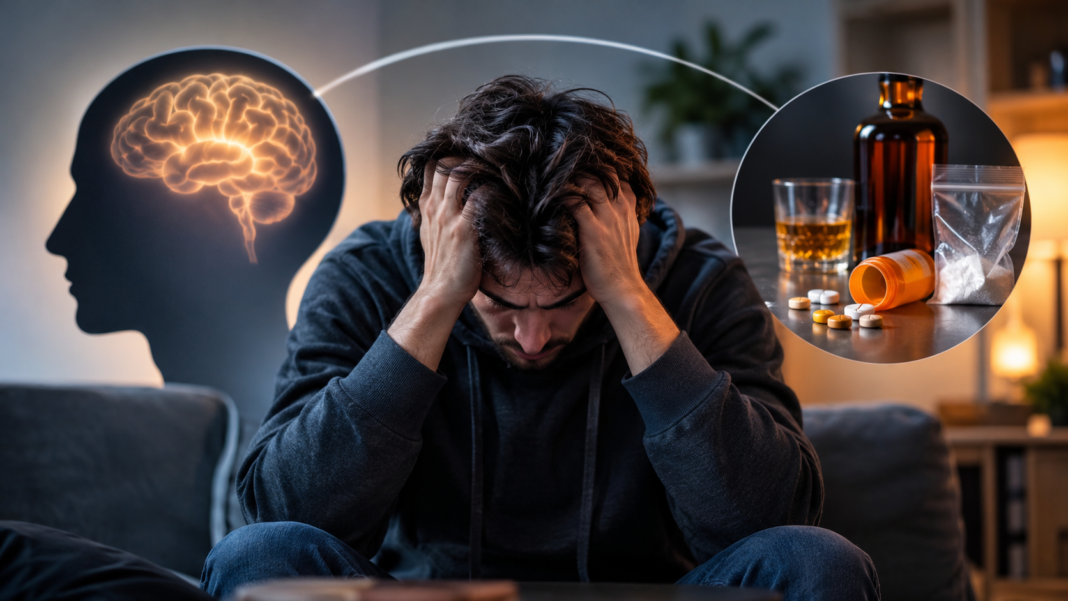
Most people assume addiction is a choice and mental illness is a separate, unrelated problem. That assumption shapes how families respond, how communities talk about recovery, and sometimes how treatment gets delivered. The reality is messier, more interconnected, and far more interesting. When researchers and clinicians started looking at the overlap between substance use disorders and mental health conditions, the numbers were striking enough to change how the field approaches both.
This article covers what the research actually says about co-occurring disorders, why treating only one condition at a time tends to fall short, what integrated care looks like in practice, and how someone can recognize the signs that both issues may be present at once.
How Common Is the Overlap Between Addiction and Mental Health Disorders
The overlap is not a rare edge case. According to the Substance Abuse and Mental Health Services Administration (SAMHSA), approximately 9.2 million adults in the United States had both a mental health disorder and a substance use disorder in 2021. That figure represents a significant portion of the people seeking help in any given year, yet only a fraction of them received treatment that addressed both conditions simultaneously.
The National Institute on Drug Abuse (NIDA) notes that people with mood disorders such as depression or bipolar disorder are roughly twice as likely to also experience a substance use disorder compared to the general population. The relationship runs in both directions. Substance use can trigger or worsen psychiatric symptoms, and untreated psychiatric conditions can push someone toward self-medication with alcohol or other drugs.
Certain pairings appear more frequently than others. Alcohol use disorder and depression are among the most commonly co-occurring combinations, as are opioid use disorder and anxiety disorders, and stimulant use with psychotic symptoms. Knowing these patterns helps clinicians ask better questions during intake and assessment.
Common Co-Occurring Disorder Combinations
| Substance Use Disorder | Frequently Co-Occurring Mental Health Condition | Notes |
| Alcohol Use Disorder | Major Depressive Disorder | Depression may precede or follow heavy drinking; both worsen each other |
| Opioid Use Disorder | Post-Traumatic Stress Disorder (PTSD) | Trauma history is common among people with opioid dependence |
| Stimulant Use Disorder | Bipolar Disorder / Psychosis | Stimulants can induce manic episodes or psychotic breaks |
| Cannabis Use Disorder | Anxiety Disorders | High-THC cannabis use is associated with increased anxiety and panic |
| Benzodiazepine Use Disorder | Generalized Anxiety Disorder | Often begins as prescribed treatment that escalates to dependence |
| Alcohol or Sedative Use Disorder | PTSD | Sedating substances are commonly used to blunt hyperarousal symptoms |
Why One Condition Feeds the Other
The relationship between mental health and addiction is not simply a matter of one problem causing the other. Several distinct mechanisms explain how they become intertwined, and understanding those mechanisms matters for anyone trying to make sense of their own experience or someone else’s.
The Self-Medication Hypothesis
One well-supported explanation is that people use substances to manage psychiatric symptoms they do not fully understand or cannot access treatment for. Someone living with undiagnosed PTSD may drink heavily because alcohol temporarily dulls hypervigilance and intrusive thoughts. Someone with untreated bipolar disorder may use stimulants during depressive episodes to feel functional. The substance use works in the short term, which is exactly why it becomes habitual. Over time, though, the same substance that offered brief relief tends to worsen the underlying condition, creating a cycle that is genuinely hard to exit without structured help.
Shared Neurological Pathways
Both addiction and many psychiatric conditions involve the brain’s dopamine and stress-response systems. The prefrontal cortex, which governs impulse control and decision-making, is affected by both long-term substance use and conditions like ADHD and schizophrenia. This shared neurobiology means that a brain already vulnerable to one condition is often more susceptible to the other. It is not a character flaw. It is a matter of how certain brains are wired and how those wiring patterns interact with environment and experience.
Trauma as a Common Root
Adverse childhood experiences (ACEs) are strongly associated with both mental health disorders and substance use disorders in adulthood. Research published in the American Journal of Preventive Medicine found that individuals with four or more ACEs were five to seven times more likely to report alcohol problems and up to twelve times more likely to report intravenous drug use compared to those with no ACEs. Trauma does not automatically produce addiction or mental illness, but it creates conditions where both are significantly more likely to develop.
What Dual Diagnosis Treatment Actually Involves
For a long time, treatment systems handled these conditions separately. Someone with depression and alcohol use disorder might be told to get sober before psychiatrists would treat the depression, while addiction counselors waited for a psychiatrist to stabilize the mood disorder first. That siloed approach produced predictably poor outcomes. Integrated dual diagnosis treatment addresses both conditions at the same time, within the same program, using a coordinated team.
An integrated program typically involves a combination of psychiatric evaluation and medication management, individual therapy using evidence-based approaches, group therapy that addresses both substance use and mental health, and case management to coordinate medical and social services. The therapeutic approaches most commonly used include Cognitive Behavioral Therapy (CBT), Dialectical Behavior Therapy (DBT), and Motivational Interviewing. Each of these has a solid evidence base for both addiction and psychiatric conditions independently, and their effectiveness in dual diagnosis settings has been studied as well.
Programs like First Light Recovery offer integrated care that treats mental health and substance use together, which reflects the current clinical consensus that addressing only one side of a co-occurring disorder rarely produces lasting results.
Recognizing the Signs That Both May Be Present
One of the more practical challenges is that the symptoms of mental health disorders and the effects of substance use can look very similar on the surface. Depression looks like the withdrawal from alcohol. Anxiety can look like stimulant withdrawal. Psychosis can be a symptom of schizophrenia or the result of methamphetamine use. This diagnostic complexity is part of why a thorough evaluation by a qualified clinician matters so much before any treatment plan is developed.
That said, there are patterns worth paying attention to. The following signs may suggest a co-occurring disorder is present, though only a clinical evaluation can confirm it.
- Persistent mood symptoms (depression, anxiety, paranoia) that do not resolve after a period of sobriety
- A history of trauma or significant adverse childhood experiences
- Using substances specifically to manage emotional or psychological discomfort rather than for social reasons
- Previous psychiatric diagnoses that predate substance use
- Family history of both mental illness and addiction
- Multiple failed attempts at recovery without any mental health support
- Symptoms that worsen significantly during periods of reduced substance use
Barriers to Getting the Right Kind of Help
Even when someone recognizes that both issues are present, finding integrated care can be difficult. Insurance coverage for mental health and substance use treatment has historically been fragmented, though the Mental Health Parity and Addiction Equity Act of 2008 was intended to address that gap by requiring insurers to cover mental health and substance use services at the same level as medical and surgical services. In practice, enforcement has been inconsistent, and many people still encounter coverage gaps.
Stigma remains another significant barrier. People living with both a psychiatric condition and an addiction often face compounded judgment from healthcare providers, family members, and even some recovery communities. The belief that someone must want to get better or must be ready before treatment can help them is not supported by evidence. Motivation can build during treatment rather than being a prerequisite for entering it.
Geography matters too. Integrated dual diagnosis programs are more available in urban areas than in rural ones, and long waitlists are common. Telehealth has expanded access somewhat, particularly for therapy and psychiatric medication management, though residential or intensive outpatient programs still require physical presence.
What Recovery Looks Like When Both Are Treated
Recovery from co-occurring disorders is not a linear process, and that is worth saying plainly. It involves setbacks. It involves trial and error with medications. It involves building skills that take time to become automatic. But the research consistently shows that people who receive integrated treatment for both conditions have better long-term outcomes than those who receive treatment for only one.
A 2015 review published in the Journal of Dual Diagnosis found that integrated treatment approaches produced significantly better substance use outcomes and modest but meaningful improvements in psychiatric symptoms compared to parallel or sequential treatment models. The evidence is not perfect, and more long-term studies are needed, but the direction of the findings is consistent.
Recovery looks different for each person. For some it means sustained abstinence. For others it means reduced use and dramatically improved mental health functioning. For many it means rebuilding relationships, returning to work, and developing a sense of identity that is not entirely organized around either the substance use or the psychiatric diagnosis. Those outcomes are realistic when care addresses the full picture rather than just the part that is easiest to treat or the part that showed up first.
Understanding the relationship between mental health and addiction does not make the path forward simple, but it does make it clearer. The conditions are linked, the treatment should reflect that, and the outcomes when it does are meaningfully better than the alternative.