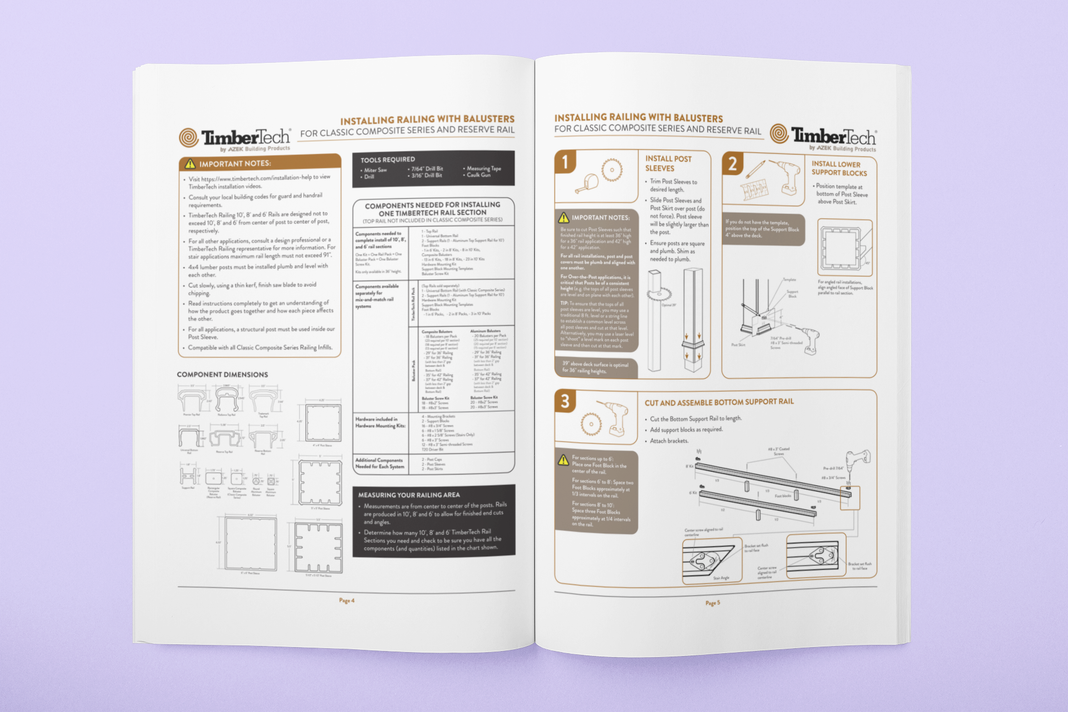
When a product leaves a manufacturing facility, the documentation that accompanies it carries significant operational weight. It is not simply a compliance formality or a box to check before shipment. For the end user — whether that is a technician assembling equipment on a job site, a consumer setting up a home appliance, or a procurement manager verifying installation requirements — the quality of that documentation directly affects how smoothly the product is adopted, used, and supported over time.
Across US manufacturing sectors, companies that consistently receive fewer product returns, lower warranty claims, and stronger customer satisfaction scores tend to share one quiet commonality: their product documentation is deliberate, structured, and built around how real people actually use the product. The instruction sheet, in particular, tends to be underestimated in product development cycles — often treated as an afterthought rather than a core deliverable.
This article outlines the framework that experienced manufacturers apply when producing instruction documentation that genuinely performs in the field.
What an Instruction Sheet Is Actually Expected to Do
An instruction sheet serves as the primary communication channel between a manufacturer and the end user at the moment of highest uncertainty — when the product is new, unfamiliar, and either being installed, operated, or configured for the first time. Its job is not to describe the product in detail or promote its features. Its job is to reduce error and build confidence in the shortest possible time.
This distinction matters because it reframes how the document should be written and organized. A document written to describe a product reads differently from one written to guide a person through a specific process. Top manufacturers treat their instruction documentation as a process guide first and a product description second. The result is a document that feels purposeful rather than procedural for its own sake.
The Gap Between What Manufacturers Write and What Users Need
One of the most persistent problems in product documentation is a misalignment between the knowledge level of the writer and the knowledge level of the reader. Engineers and product developers who draft instruction content often operate with deep familiarity with the product. They know what “align the housing bracket before securing the retention clip” means without further elaboration. The person reading it at 7 AM on a job site may not.
This gap creates frustration, increases installation errors, and often results in calls to technical support that could have been avoided entirely. The framework that high-performing manufacturers use starts by identifying the exact baseline knowledge level of their intended user — not their ideal user, but their actual user — and writing the documentation from that foundation upward.
How the Document Supports Risk Reduction
When instruction documentation fails, the consequences are rarely neutral. They manifest as returned products, safety incidents, incorrect assembly, or warranty claims that erode margin and require operational resources to resolve. A well-constructed instruction document is, at its core, a risk management tool. It anticipates where errors are most likely to occur and addresses those moments proactively, with clear sequencing, explicit warnings placed at the right points in the process, and language calibrated for clarity rather than precision of expression.
The Structural Foundation That Governs Effective Documentation
Structure is the underlying framework that determines whether a user can extract the right information at the right moment. Most poorly performing instruction documents are not poorly written — they are poorly organized. The information exists, but it appears in the wrong sequence, at the wrong depth, or without the visual hierarchy needed to guide the reader through a process efficiently.
Sequencing Information Around the User’s Physical Journey
The most effective instruction documents mirror the exact sequence of actions the user will take with the product in hand. This means the document begins where the user begins — typically with what is in the box, what tools are required, and what conditions must be in place before the process starts — and moves forward in the same order as the task itself.
This sounds obvious, but it is frequently violated. Many manufacturers sequence their documentation around how the product is engineered rather than how it is used. The result is a document that requires the reader to mentally reorder steps or cross-reference sections to understand what to do next. Both of those activities increase cognitive load and create opportunities for error.
Using Visual Hierarchy to Replace Complexity
Clear visual hierarchy allows a reader to navigate a document without reading every word. Headers, numbered steps, and cautionary callouts help the user scan and locate what is relevant to their current position in the task. When these elements are absent or inconsistently applied, the document becomes a block of text that demands full sequential reading — which most users will not do in a field or installation context.
Top manufacturers apply consistent visual formatting standards across their entire documentation library so that users who encounter multiple products develop familiarity with the layout and can move through documentation more efficiently over time. This consistency also reduces training overhead for teams that interact with the products regularly.
Language Choices That Determine Whether Instructions Are Followed
The words chosen in an instruction document have a direct effect on whether the instructions are understood and followed correctly. This is not about simplicity for its own sake — it is about eliminating ambiguity at the moments that matter most. Ambiguous language in a technical document does not produce a range of acceptable outcomes. It produces a range of unpredictable ones.
The Problem With Passive and Abstract Language
Passive construction is one of the most common sources of ambiguity in technical documentation. A sentence like “the component should be secured before proceeding” leaves open several questions: who is securing it, how it should be secured, and what constitutes “secured.” Active, direct construction removes that ambiguity: “Tighten the retaining bolt until the component no longer moves.” The second version tells the user exactly what to do and how to verify that the step is complete.
Abstract language creates similar problems. Words like “properly,” “adequately,” and “as needed” are meaningless in a procedural context unless they are defined or replaced with observable criteria. High-performing manufacturers train their documentation teams to identify and eliminate these terms during review.
Safety Language Requires Its Own Protocol
Warning and caution language deserves particular attention because misplaced or poorly written safety notices do not simply fail — they can actively contribute to unsafe outcomes. Safety notices that appear too frequently lose their authority. Notices that are buried within body text are missed. Notices that use vague language leave the user uncertain about the actual risk.
Industry standards bodies, including ANSI, have established guidelines for how safety information should be formatted, categorized, and positioned within product documentation. Manufacturers who align their safety language with recognized standards not only reduce liability exposure but also produce documentation that behaves more predictably across their product range.
Production and Physical Format Considerations
The physical format of an instruction document affects how it performs in real-world conditions. A sheet printed on lightweight paper that tears easily in field conditions, or text printed in a font size too small to read without magnification, undermines the content regardless of how well it is written. These are not cosmetic concerns — they are operational ones.
Matching Format to Use Environment
Manufacturers who supply products to industrial, construction, or outdoor environments face different documentation requirements than those supplying consumer retail products. The material weight, print durability, fold structure, and packaging integration all need to reflect the conditions under which the document will actually be used.
A laminated or heavier-stock sheet may be appropriate for a product used in a workshop or outdoor installation context. A folded multi-panel format may be necessary when a product has a complex assembly process that benefits from a step-by-step layout the user can unfold progressively. These decisions should be made during the product development cycle, not during final packaging, when constraints are harder to address.
Packaging Integration and the First Impression
How and where an instruction sheet is placed within the product packaging affects whether users locate and use it at all. Documents buried under packaging materials or tucked beneath foam inserts are frequently overlooked. Manufacturers who position their instruction documentation prominently — visible upon opening the package — see higher rates of document engagement and, by extension, fewer errors during initial use.
• Place the instruction sheet on top of or attached to the product, not beneath it
• Use a format size that corresponds to the product packaging dimensions so the sheet does not become crumpled or damaged during transit
• Avoid folding the document so tightly that sections are obscured or difficult to open flat
• Ensure printing contrast and font size are readable without external aids in standard lighting conditions
Validation: How Manufacturers Test Whether Their Documentation Works
Writing and producing an instruction document is only the first part of the process. Validating whether it actually performs as intended requires testing it against the behavior of real users in realistic conditions. Many manufacturers skip this step, which means documentation weaknesses only become visible after the product has shipped and returns or support calls begin to accumulate.
Structured User Testing Before Release
User testing for documentation does not require formal laboratory conditions. It requires observing a representative sample of intended users attempting to complete the process using only the document — without coaching, clarification, or supplemental information. The points where users hesitate, ask questions, or make errors reveal exactly where the document is failing. Those observations drive targeted revisions that address real gaps rather than assumed ones.
Revision as a Continuous Process
Instruction documentation should not be treated as a one-time deliverable that is finalized at product launch. Field feedback, warranty data, and technical support patterns all contain information about how well the documentation is performing over time. Manufacturers who establish a formal review cycle for their documentation — tied to product updates or driven by threshold levels of field feedback — maintain documentation that improves in accuracy and usability as the product matures in the market.
Conclusion
The instruction sheet is one of the few product deliverables that touches every single customer at the most critical point in their experience with the product. It is the document they rely on when they have the product in front of them and need to know exactly what to do. Its quality — in structure, language, format, and production — has a direct and measurable effect on error rates, return rates, support costs, and the overall perception of the product.
The manufacturers who treat instruction documentation as a core engineering output rather than a production afterthought consistently see better operational outcomes across their product lines. The framework is not complicated. It requires clear thinking about who is using the document, what they need to accomplish, and what conditions they are working in. It requires language that removes ambiguity and structure that matches the physical sequence of the task. And it requires a production format that survives the environment in which the product is actually used.
For companies looking to tighten the connection between product quality and the documentation that represents it, the instruction sheet is a logical and high-return place to begin.