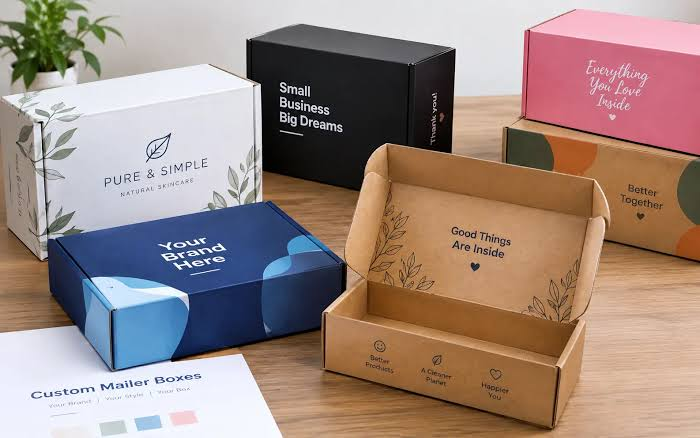
For subscription box companies and direct-to-consumer brands operating in the US, packaging is no longer a back-end logistics detail. It has become one of the few physical touchpoints a brand controls from the moment a product leaves the warehouse to the moment a customer opens it. Unlike a website or social media presence, a shipping box arrives in someone’s hands. It sits on a doorstep. It gets carried inside. It gets opened, often photographed, and sometimes kept. That physical reality gives the outer packaging a weight that most digital interactions simply cannot match.
As the DTC model has matured and competition has increased across virtually every product category, brands are under real pressure to create a consistent unboxing experience without introducing unnecessary cost or operational complexity. Personalized shipping boxes are one of the most practical tools available for achieving both — but only when approached with a clear understanding of what customization actually involves, what decisions matter most, and where brands commonly make costly mistakes.
This guide covers the operational, strategic, and production considerations that subscription and DTC brands need to understand before committing to a custom box program.
What Personalized Shipping Boxes Actually Involve for DTC Operations
Custom packaging in the DTC space covers a wide range of options, from fully bespoke structural design to simple print-on-demand logos applied to standard corrugated stock. Understanding where your needs sit on that spectrum is the first real decision a brand has to make. For brands just beginning to explore this area, reviewing a comprehensive Shipping Boxes Personalized guide can help clarify which options align with volume requirements, lead times, and budget constraints before any vendor conversations begin.
Personalization in this context generally refers to printed branding applied to the exterior, interior, or both surfaces of a corrugated or rigid shipping box. This can include brand colors, logos, patterns, messaging, and structural features like custom inserts or die-cut openings. The level of personalization available to a given brand depends heavily on order volume, since most manufacturers apply different pricing tiers and minimum order quantities based on the complexity of the print run.
The Difference Between Print Customization and Structural Customization
Many brands enter the custom packaging process assuming that choosing a box color or adding a logo constitutes full personalization. In practice, there are two distinct layers of customization that operate independently and carry different cost and lead time implications. Print customization refers to graphics, colors, and text applied to existing box structures. Structural customization involves changing the physical dimensions, opening mechanisms, or internal configuration of the box itself.
For most subscription box brands, print customization alone is sufficient and significantly more cost-effective. Structural changes require tooling investment and longer production cycles, which can create inventory planning challenges for brands with monthly or quarterly fulfillment schedules. Understanding this distinction upfront prevents brands from committing to production timelines they cannot realistically support.
How Volume Affects Your Customization Options
The relationship between order volume and available customization is one of the most consequential factors in any custom packaging program. At lower order volumes, brands typically have access to digital printing methods, which allow for full-color designs without plate costs. As volume increases, offset or flexographic printing becomes available and often more cost-effective per unit, though it introduces higher upfront setup costs and less flexibility for frequent design changes.
For DTC brands that ship personalized boxes across seasonal or rotating collections, this creates a real planning challenge. A brand that changes its box design quarterly needs to account for setup costs, minimum order quantities, and inventory carrying costs across multiple SKUs simultaneously. Brands that underestimate this complexity often find themselves holding excess stock of outdated packaging while rushing new designs through production.
Structural Considerations That Affect Shipping Performance
Aesthetics are often the starting point for custom packaging decisions, but the structural integrity of a shipping box has a direct impact on product safety, return rates, and customer satisfaction. A beautifully printed box that arrives damaged or fails to protect its contents creates a customer experience problem that no design element can offset. This is particularly true for subscription boxes, where the unboxing moment is a core part of the product promise.
Corrugated Board Grades and Why They Matter
Corrugated board is the standard material for most DTC shipping boxes, but it is not a single uniform product. It varies in flute type, wall thickness, and board composition, all of which affect crush resistance, stacking strength, and moisture tolerance. The appropriate board grade for a given shipment depends on the weight of the contents, the distance traveled, and how the boxes will be stacked during transit and warehouse storage.
Brands that default to the lightest available board grade to reduce material cost often encounter higher damage rates, particularly for shipments traveling through multiple carrier hubs or during high-volume shipping periods when handling conditions are less controlled. Conversely, over-specifying board weight adds unnecessary cost and dimensional weight charges with carriers like UPS and FedEx. Finding the right balance requires testing, not assumption.
Box Dimensions and Carrier Pricing
Dimensional weight pricing, which calculates shipping charges based on the volume of a package rather than its actual weight, has been standard practice among major US carriers for years. As explained by the UPS dimensional weight policy, packages that occupy significant space relative to their actual weight are billed at a higher rate. This makes box sizing one of the most financially meaningful decisions in a DTC shipping operation.
Custom box programs give brands precise control over dimensions, which can result in meaningful shipping cost reductions over time. A box designed specifically for a brand’s product assortment, rather than an off-the-shelf standard size, typically eliminates excess void fill, reduces dimensional weight charges, and presents more cleanly to the end customer. This is one of the clearest financial cases for investing in custom packaging beyond branding alone.
Print Quality and Design Consistency Across Production Runs
One of the least discussed but most operationally significant challenges in custom packaging is maintaining consistent print quality across multiple production runs. For subscription brands that reorder boxes regularly, color accuracy and print registration can drift between runs if production specifications are not carefully managed. This inconsistency becomes visible when customers receive boxes from different production batches side by side, or when brand photography does not match the physical product.
Color Management in Corrugated Printing
Corrugated board does not behave the same way as paper or card stock in print production. Its surface texture, liner composition, and porosity affect how inks absorb and appear. Colors that look accurate in digital proofs often appear differently on the final corrugated substrate, particularly with rich or dark tones. Brands that rely on Pantone color systems for brand consistency need to work with manufacturers who can translate those specifications accurately into corrugated printing, which requires specific ink formulations and calibration.
This is not a minor detail for brands where color is a core part of brand identity. A mismatch between a brand’s standard color and the color that appears on a shipping box creates an inconsistency that can affect how professional the brand appears to first-time customers, retail partners, or press contacts who receive product samples.
Managing Design Changes Without Production Disruption
Subscription brands frequently update their box designs to reflect seasonal themes, product refreshes, or campaign-specific packaging. Each design change triggers a new production setup process, which takes time and generates costs depending on the printing method in use. Brands that plan design changes without accounting for the lead time required to produce new packaging often find themselves shipping in mismatched or outdated boxes during a transition period.
The solution is to build design change cycles into the production calendar well in advance — typically with a minimum buffer of several weeks depending on the manufacturer’s capacity and current order load. Brands with high design change frequency may also benefit from maintaining a small inventory of unbranded boxes for overflow situations, giving them flexibility when new designs are delayed.
Sourcing and Vendor Evaluation for Custom Box Programs
Choosing a packaging manufacturer for a personalized shipping box program involves more than comparing price per unit. The vendor relationship affects production lead times, quality consistency, minimum order flexibility, and the brand’s ability to scale or pivot as business conditions change. Brands that select vendors based solely on initial unit cost often encounter problems when they need to adjust order quantities, rush a production run, or address quality issues.
Questions That Reveal Operational Reliability
When evaluating packaging vendors, the most useful questions are operational rather than technical. How does the vendor handle quality defects discovered after delivery? What is the realistic lead time during peak production periods such as the fourth quarter? Does the vendor have capacity to accommodate a significant volume increase within a short period? How are design files reviewed and approved before production begins?
The answers to these questions reveal how a vendor operates under pressure — which is precisely when reliable packaging supply matters most for a subscription brand approaching a major shipping cycle.
Domestic vs. Overseas Sourcing Tradeoffs
The decision to source custom boxes domestically versus overseas involves tradeoffs that go beyond unit price. Domestic manufacturers generally offer shorter lead times, more flexible minimum order quantities, and easier communication throughout the production process. Overseas manufacturers may offer lower unit costs at scale, but typically require longer planning horizons, larger minimum orders, and more careful quality oversight.
For brands that ship personalized boxes on a predictable monthly schedule with stable designs, overseas sourcing can work well when managed carefully. For brands with variable volumes, frequent design changes, or tight fulfillment windows, domestic sourcing usually provides the operational reliability that offsets the higher per-unit cost.
Closing Considerations for Brands Building a Custom Packaging Program
Personalized shipping boxes represent a real operational commitment, not simply a design project. The decisions involved — from board grade and print method to vendor selection and volume planning — have direct consequences for cost, product protection, and the consistency of the customer experience. Brands that treat custom packaging as a procurement decision rather than a strategic one tend to encounter the most problems, particularly as they scale.
The most effective approach is to work backwards from the customer experience you want to create and the operational constraints you realistically face. Define what consistency looks like for your brand, understand your volume and design change cadence, and select a production method and vendor relationship that can support those requirements reliably over time — not just for the first order.
For subscription box and DTC brands in the US, the investment in well-executed personalized shipping boxes pays returns that extend well beyond aesthetics. It reduces damage-related returns, strengthens brand recognition at the point of delivery, and creates a physical product experience that supports long-term customer retention. Done carefully, it is one of the more durable operational investments a growing brand can make.