Concrete floors take a beating. Between forklift traffic, chemical spills, heavy machinery, and constant foot traffic, an untreated industrial floor wears down faster than most business owners expect. Cracks form, dust kicks up, and safety hazards multiply — all while production slows and maintenance costs climb.
That’s where a properly installed coating system changes everything. At Garage Floor Coating of Boston, we’ve seen firsthand how the right flooring solution can transform a warehouse, manufacturing facility, or commercial space into a cleaner, safer, and more efficient operation. This isn’t a cosmetic fix. It’s a long-term investment in the health of your facility and the people who work in it.
If you’re weighing your options for protecting a commercial or industrial space, here’s what you need to know about choosing a coating system that actually performs under pressure.
What Makes Industrial Concrete Different From Residential Flooring?
Industrial environments place demands on flooring that a typical garage or basement never will. Think about the daily stress a warehouse floor absorbs: pallet jacks rolling across the same path hundreds of times a day, oil and chemical drips from equipment, temperature swings from loading dock doors opening and closing, and the occasional dropped tool or component.
Standard concrete simply isn’t built to withstand that kind of abuse indefinitely. Without protection, it becomes porous, absorbing liquids and harboring bacteria. It chips and cracks under repeated impact. Eventually, dust from deteriorating concrete becomes an airborne problem, compromising both equipment and employee health.
A coating system engineered for industrial use addresses these issues at the source. The right formulation bonds to the concrete substrate, creating a seamless, chemical-resistant barrier that can handle heavy loads, resist abrasion, and stand up to the spills common in manufacturing, automotive, and warehouse settings.
How Does a Quality Coating System Improve Workplace Safety?
Safety isn’t an afterthought in industrial settings — it’s often the deciding factor in how a facility operates day to day. Slippery floors, poor visibility, and inconsistent surfaces contribute to a significant share of workplace injuries every year.
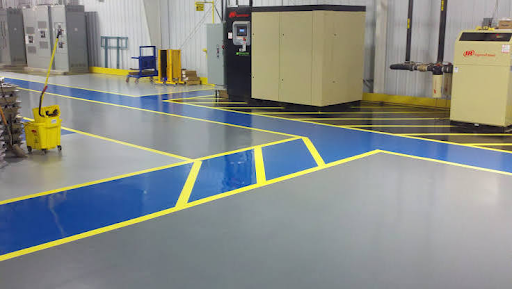
A well-designed coating system tackles these risks directly. Textured, slip-resistant finishes reduce the chance of falls, even in areas prone to moisture or oil exposure. High-visibility color options and striping can mark walkways, hazard zones, and equipment paths, giving employees clear visual cues without the need for additional signage.
There’s also the matter of chemical exposure. Many industrial coatings are formulated to resist harsh solvents, acids, and oils, which means spills are easier to contain and clean before they become a slipping hazard or a long-term stain. When a facility invests in flooring built for its specific risks, it sends a clear message to employees: their safety is a priority, not an afterthought.
What Should Boston Business Owners Look for in a Coating Contractor?
Not every flooring company has the experience or equipment necessary to handle a large-scale commercial project. Industrial coatings require careful surface preparation, precise mixing ratios, and application techniques that differ significantly from residential jobs.
Here’s what separates a reliable contractor from the rest:
- Proper surface preparation. Grinding and profiling the concrete correctly ensures the coating adheres and lasts for years, not months.
- Experience with high-traffic environments. A contractor who understands the unique demands of warehouses, manufacturing plants, and commercial garages will recommend the right thickness and formulation for your specific use case.
- Transparent timelines. Industrial facilities often can’t afford extended downtime. A trustworthy contractor will provide a realistic schedule and stick to it.
- Local knowledge. Boston’s climate — with its humid summers and freezing winters — affects how concrete expands and contracts. A contractor familiar with the region will account for this in their application process.
Choosing a contractor who checks these boxes means fewer surprises down the road and a floor that performs as promised.
What Are the Long-Term Benefits of Investing in Industrial Flooring?
Beyond the immediate improvements in safety and appearance, a quality coating system delivers measurable value over time. Facilities that invest in durable flooring typically see reduced maintenance costs, since sealed surfaces are far easier to clean and resist the staining and pitting that untreated concrete suffers.
There’s also an efficiency angle. Reflective, high-gloss finishes can improve lighting throughout a facility, reducing reliance on overhead fixtures and creating a brighter, more productive work environment. For businesses that host clients or conduct inspections on-site, a polished, professional-looking floor also reinforces a sense of quality and attention to detail that extends to how customers perceive the entire operation.
A durable solution built to withstand heavy machinery, chemical exposure, and daily wear is exactly what our Industrial Floor Coating service was designed to deliver. Garage Floor Coating of Boston specializes in systems engineered for exactly these conditions, combining strength with a finish that holds up visually for years after installation.
Choosing the Right Coating for Your Facility
Not every industrial space has the same needs. A food processing facility, for example, requires a coating that meets strict sanitation standards and resists bacterial growth. A machine shop, on the other hand, needs a surface tough enough to withstand dropped tools and constant equipment movement without chipping.
Choose a thicker, more abrasion-resistant system if your facility handles heavy equipment or frequent impact. Opt for a chemical-resistant formulation if your operation involves regular exposure to oils, solvents, or cleaning agents. And if slip resistance is your top concern — particularly in areas prone to moisture — a textured topcoat will serve you better than a standard gloss finish.
Working with a contractor who takes the time to understand your specific operations, rather than applying a one-size-fits-all solution, makes a measurable difference in how long your floor performs and how well it meets the demands of your business.
Ready to Protect Your Facility for the Long Haul?
A facility’s floor works harder than almost any other surface in the building, yet it’s often the last thing business owners think to upgrade. Investing in a professional coating system now means fewer repairs, safer working conditions, and a facility that looks and performs the way it should for years to come.
If you’re ready to see what a properly installed industrial coating can do for your Boston-area facility, reach out to Garage Floor Coating of Boston today. Our team will walk you through your options, assess your space, and help you choose a system built specifically for the way your business operates.