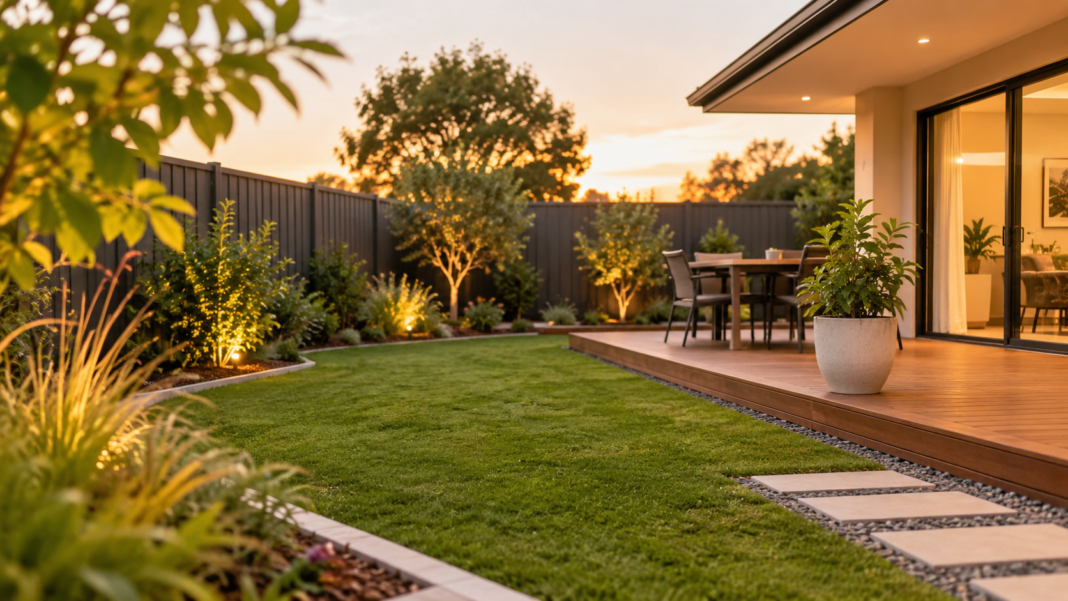
When people plan a new home, most of the energy goes into the floor plan. How many bedrooms, where the kitchen sits, whether there’s room for a study. The backyard usually gets whatever is left over once the house is drawn. Then the build finishes, the family moves in, and they’re standing on bare clay wondering how to turn it into somewhere they actually want to spend time.
As a builder in Sydney, I see this all the time. The good news is that a little planning at the design stage makes outdoor space far easier, cheaper and lower maintenance than trying to fix it afterwards. Here’s what I’d suggest thinking about before construction starts.
Start with how you’ll use the space
Before you think about plants or paving, think about people. Who will use the yard, and for what? A young family might want a flat patch of lawn where the kids can kick a ball within sight of the kitchen. Older owners may care more about a shaded spot to sit and a garden that doesn’t need hours of weeding. If you entertain, you’ll want an outdoor area that connects easily to the kitchen and living room, not one you reach through the laundry.
Write down three or four things you want the outdoor space to do. That short list will shape almost every other decision.
Think about the sun early
Orientation matters outside as much as inside. In Sydney, a north-facing backyard gets the most winter sun, which is lovely for a living area that opens onto a deck or alfresco. West-facing spaces cop the harsh afternoon sun in summer, so they usually need shade from a pergola, a covered roof or well-placed trees.
Have a look at where the sun falls on your block at different times of day before the design is locked in. It might change where you put the alfresco, the clothesline or the vegetable garden.
Connect inside and out
The outdoor spaces people use most are the ones that feel like part of the house. Large sliding or stacker doors from the living area, a level threshold, and flooring that runs from inside to the alfresco all help the two spaces read as one. It sounds simple, but it’s much easier to plan for at design stage than to retrofit later.
If you’re building a duplex or dual occupancy, this is even more important. Each dwelling usually has a smaller yard, so every square metre needs to work. When we plan these projects, we think about each home’s private open space at the same time as the floor plan, so both households get a usable, private outdoor area rather than a leftover strip down the side. If you’re weighing up this kind of project, it’s worth talking to builders who plan low-maintenance duplex homes in Sydney early, before the design is set.
Get the drainage right first
This is the unglamorous part, but it’s the one that causes the most headaches. Sydney gets heavy downpours, and a yard that slopes the wrong way can send water towards the house or leave soggy patches that never dry out.
Make sure the finished ground levels fall away from the house, that downpipes and stormwater are connected properly, and that paved areas have somewhere for water to go. Your builder and any landscaper should be on the same page about levels before anything is laid. Fixing drainage after the turf and paving are down is expensive.
Choose hardscape that lasts
Paving, decking and retaining walls are the bones of an outdoor space. A few practical tips:
- Pick materials that suit the conditions. Some stone and porcelain pavers stay cooler underfoot in summer than darker options. Composite decking needs less upkeep than timber, although good hardwood still looks beautiful if you’re happy to oil it.
- Keep it simple. One or two paving materials usually look better and cost less than a patchwork of different finishes.
- Plan for slip resistance. Areas around pools and near doors get wet, so check the slip rating of what you choose.
- Build retaining walls properly. On sloping blocks, retaining walls are often essential, and depending on the height they may need engineering. Don’t treat them as an afterthought.
Plant for low maintenance
An easy-care garden comes down to choosing the right plants for the spot and grouping them sensibly.
- Go local where you can. Many Australian native plants are suited to Sydney’s climate and soils and, once established, often need less watering than thirsty exotics. A local nursery can tell you what does well in your area.
- Group plants by water needs. Put the plants that need regular water together, ideally close to a tap, and keep the hardier ones further out.
- Use mulch. A good layer of mulch helps hold moisture in the soil and keeps weeds down.
- Be realistic about lawn. Lawn is great for kids and pets, but it needs mowing, watering and feeding. A smaller, well-defined lawn area is often easier to look after than a big one.
- Think about mature size. That small tree in a pot might grow wide and tall. Check how big plants get so they don’t crowd the house, block solar panels or damage paving down the track.
Don’t forget the practical bits
The details that make a yard pleasant day to day are easy to forget. Where will the bins live, and can you wheel them to the street without going through the garage? Where does the clothesline go so it gets sun but isn’t the first thing you see? Is there an outdoor tap and a power point where you’ll need them? Do you want lighting for evenings? Adding these during the build is far simpler than chasing them later.
Budget for it from the start
The most common mistake I see is leaving no money for outdoor work. Landscaping, driveways, fencing, paving and the alfresco can add up quickly, and if they aren’t in the budget, families end up living with a bare yard for months or years. Even if you plan to do some of it in stages, include it in your overall plan so you know what’s coming.
Bringing it together
A great outdoor space doesn’t need to be elaborate. It needs to suit how you live, work with the sun and the slope of your block, and be easy to look after. If you think about it at the same time as the house rather than after, you’ll end up with a home that feels bigger, works better and is much nicer to come back to at the end of the day.