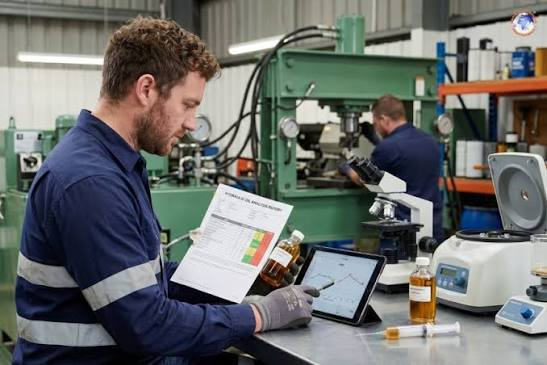
Hydraulic systems are among the most mechanically demanding components in industrial and heavy equipment operations. They operate under sustained pressure, generate significant heat, and are often expected to perform without interruption across long duty cycles. When something goes wrong inside a hydraulic system, it rarely announces itself clearly. More often, the degradation is gradual — showing up first in the fluid before it ever appears as a mechanical symptom.
A hydraulic fluid analysis report gives equipment managers an internal view of what the system is actually experiencing. But receiving that report and knowing how to interpret it are two different things. Many managers receive these documents from service providers, scan the numbers, and file them without fully understanding what the data is communicating. That gap between data and decision is where avoidable failures tend to occur.
This guide is written for equipment managers who want to move past surface-level familiarity and develop a working understanding of what each section of a fluid analysis report means — and what actions those findings should prompt.
What Hydraulic Fluid Analysis Actually Measures
Hydraulic fluid analysis is a diagnostic process that evaluates the condition of the fluid itself, identifies the presence of contaminants, and measures the wear metals being shed by internal components. It is not a single test but a structured set of tests performed on a fluid sample drawn from an operating system. Each test answers a different question about what is happening inside the hydraulic circuit. A well-structured Hydraulic Fluid Analysis guide will typically describe these tests in layers — starting with fluid condition, moving into contamination, and then addressing component wear.
Understanding what is being measured matters because the tests do not produce one unified score. They produce separate readings across multiple categories, and the relationship between those readings is often more informative than any single value on its own.
Fluid Condition Testing
Fluid condition testing examines the base properties of the hydraulic fluid — specifically whether it still retains the characteristics it needs to protect and support the system. The most relevant properties evaluated include viscosity, oxidation, and the presence of additive depletion. Viscosity, which refers to the fluid’s resistance to flow, determines how effectively the fluid transmits pressure and lubricates moving surfaces. When viscosity shifts significantly in either direction, it signals that the fluid has changed in ways that affect system efficiency and component protection.
Oxidation occurs when hydraulic fluid reacts with oxygen under heat and pressure over time. It is a natural aging process, but it accelerates when systems run hot or when fluid change intervals are extended beyond what the operating conditions warrant. Oxidized fluid becomes thicker, forms deposits, and loses its ability to protect surfaces. Additive depletion follows a similar pattern — the protective chemistry added to hydraulic fluids during formulation is gradually consumed during operation, and once it is exhausted, the fluid no longer performs to its design specification.
Contamination Analysis
Contamination is one of the leading causes of hydraulic system failure, and it takes several forms. Water contamination is particularly destructive because even small amounts can compromise lubrication, promote corrosion, and accelerate the breakdown of fluid additives. Water can enter a hydraulic system through condensation, worn seals, or during fluid transfers that are not conducted carefully. The fluid analysis report will typically flag water content as either acceptable, marginal, or critical, and the appropriate response changes significantly depending on which category applies.
Particle contamination — the presence of solid debris in the fluid — is measured through particle counting or through cleanliness rating systems such as the ISO Cleanliness Code, a standardized scale used across the hydraulic and fluid power industry to classify the level of particulate contamination in a fluid sample. High particle counts indicate that filtration is not keeping pace with contamination, that a filter is damaged or bypassing, or that component wear is generating debris faster than the system can remove it. Glycol contamination, which typically enters the fluid when a cooler or heat exchanger develops a leak, is also captured in contamination analysis and requires immediate attention when detected.
Interpreting Wear Metals in the Report
Wear metal data is often the most actionable portion of a hydraulic fluid analysis report, and it is also the section most frequently misread. Every hydraulic system sheds trace amounts of metal during normal operation as components move against one another under pressure. These particles dissolve or remain suspended in the fluid, and laboratory analysis can identify which metals are present and in what concentrations. The metals identified correspond directly to the materials used in specific components — pumps, valves, cylinders, and fittings are each composed of different alloys, and their wear signatures are distinguishable in a laboratory setting.
Establishing a Baseline Before Comparing Results
A single wear metal reading in isolation has limited diagnostic value. What matters is how the current reading compares to previous samples taken from the same system under similar operating conditions. This is why consistent, scheduled sampling is more useful than occasional testing. When results are tracked over time, trends become visible — a component that is beginning to wear excessively will show a steady increase in its associated metals across multiple samples before it reaches a point of failure. This progression gives equipment managers time to schedule repairs during planned maintenance windows rather than reacting to unplanned breakdowns.
Without a baseline, an elevated wear metal reading could reflect normal break-in conditions in a newer system, a one-time contamination event, or the early stages of a genuine component problem. The baseline is what turns a data point into a diagnosis.
Understanding Which Metals Indicate Which Components
The specific metals identified in a report point toward specific components in the system. Iron and chromium are typically associated with cylinder rods, valve bodies, and pump housings. Copper and lead often indicate wear in bronze bushings or brass fittings. Aluminum readings can suggest wear in pump end plates or housing components. Silicon, while not a metal in the traditional sense, is tracked as a contamination indicator — elevated silicon usually means that airborne dirt or sand has entered the system, which has direct implications for filter integrity and system sealing.
Reading this data correctly requires understanding the composition of components in the specific system being tested, which is why equipment managers benefit from keeping system documentation accessible when reviewing reports. A generic interpretation without equipment-specific context can lead to either unnecessary concern or missed warning signs.
Responding to Report Findings Without Overreacting
One of the more practical challenges in working with fluid analysis reports is calibrating the response appropriately. Not every out-of-range reading demands an immediate shutdown. Some findings warrant close monitoring and a follow-up sample at a shortened interval. Others require prompt action, such as draining and replacing the fluid, inspecting a specific component, or servicing the filtration system. The report itself, if issued by a qualified laboratory, will typically include a recommendation category — but those recommendations should be reviewed in context with what the equipment manager knows about the system’s operating history and recent workload.
When to Escalate Findings to a Technician
Certain findings in a hydraulic fluid analysis report cross a threshold where internal review is no longer sufficient. Sudden spikes in multiple wear metals simultaneously, the confirmed presence of water or glycol, or particle counts that have climbed sharply between samples all warrant direct involvement from a qualified hydraulic technician. These are not situations where a fluid change alone will resolve the underlying problem — they indicate that something specific is happening inside the system that requires physical inspection.
Equipment managers who try to manage these situations solely through fluid changes risk masking the symptoms while the underlying damage continues. The fluid analysis report is a diagnostic tool, not a corrective action in itself. Acting on the findings in a timely and appropriate way is what produces the reliability outcome that the analysis is designed to support.
Building a Fluid Analysis Program That Works Over Time
A hydraulic fluid analysis program only produces reliable intelligence when it is conducted consistently. Sampling intervals should be tied to operating hours, not calendar time alone, because a system running continuous shifts accumulates wear and contamination much faster than one operating intermittently. Samples should always be drawn from the same location in the system, using clean equipment, to ensure that results are comparable across intervals. Chain-of-custody discipline during sample collection is a detail that is often overlooked but significantly affects data quality.
The results should be stored in a format that allows trend review over time — whether that is a simple spreadsheet or a maintenance management system. The value of any single report grows considerably when it can be compared against five or ten prior results from the same piece of equipment. That longitudinal view is what allows equipment managers to distinguish between normal variation and a developing problem, and it is what makes fluid analysis a genuine predictive maintenance tool rather than a reactive one.
Closing Thoughts
Reading a hydraulic fluid analysis report well is a skill that develops with practice and context. The data itself is only as useful as the understanding brought to it. Equipment managers who invest time in learning what each section of the report measures, how wear metals relate to specific components, and how to distinguish between routine findings and genuine warning signs will make better maintenance decisions — and those decisions translate directly into reduced downtime, extended component life, and more predictable operating costs.
The report is not a judgment about whether a system has been maintained correctly. It is a current picture of what the fluid and the system are experiencing. Used consistently and interpreted carefully, it becomes one of the more reliable tools available for managing hydraulic equipment over the long term.